
Best Custom Rolling Papers of 2026 — Ranked by Quality & Value

The best custom rolling papers in 2026 blend premium-grade materials — think unbleached plant fiber or ultra-thin rice sheets — with high-resolution, fade-resistant printing and surprisingly low minimum orders. That combination makes personalized branding accessible to just about everyone, from solo enthusiasts to global event planners. If you're shopping around this year, the standout picks all nail the same fundamentals: thin, even-burning sheets, vivid full-color artwork, and eco-conscious sourcing — without torching your budget on the first run.
Here's the thing — custom rolling papers aren't a novelty anymore. They've quietly become one of the most cost-effective promotional tools in the accessories space. A single branded booklet delivers over 30 individual brand impressions. And the cost per impression? It's a fraction of what you'd spend on stickers, lighters, or even business cards. That math alone explains why roughly 68% of accessory brands now work custom papers into their marketing mix somewhere.
Whether you're ordering a few dozen booklets for a friend's birthday or 50,000 units for a nationwide product launch, this post covers everything you need to know — materials, printing methods, design strategy, pricing, and the real-world mistakes that drain budgets. No fluff. Just actionable stuff you can use before your next order.
Table of Contents
- Why 2026 Is a Turning Point for Custom Rolling Papers
- What Actually Makes a Rolling Paper "The Best"?
- Top Custom Rolling Paper Options for 2026 (Comparison Table)
- Paper Material Breakdown: Rice, Unbleached & Ultra-Thin
- Printing Methods That Won't Fade or Flake
- Design Tips That Turn Papers Into Keepsakes
- Bulk Ordering for Brands, Events & Corporate Gifting
- MOQ, Lead Times & Pricing in 2026
- Mistakes That Cost You Money (And How to Dodge Them)
- Frequently Asked Questions
Why 2026 Is a Turning Point for Custom Rolling Papers
Let's be honest — the custom rolling paper market looked completely different just three years ago. Personalization back then meant stamping a single-color logo on generic white booklets and calling it done. That era? It's over.
In 2026, breakthroughs in food-grade soy ink formulations and digital short-run printing have demolished the old barriers. You don't need to commit to 10,000-unit runs anymore to get vibrant, edge-to-edge artwork on every sheet. Some suppliers — RYOP included — now offer quantities as low as a few hundred booklets with full custom design. That means independent brands, pop-up shops, and even individual hobbyists can play the same branding game that large corporations used to monopolize.
And consumer expectations? They've shifted too.
A 2025 promotional products industry survey found that 74% of recipients said they kept branded rolling accessories longer than any other giveaway item — longer than pens, koozies, or tote bags. That kind of retention rate is almost unheard of in the promo world. When someone tucks a beautifully designed paper booklet into their pocket, your brand literally travels with them. That's not a metaphor. That's just... what happens.
On top of that, sustainability has moved from a nice-to-have to a deal-breaker. Buyers in 2026 are actively filtering for unbleached, chlorine-free papers with plant-based inks. If your custom papers can't check those boxes, you're already falling behind.
What Actually Makes a Rolling Paper "The Best"?
The short answer? A rolling paper is only as good as its burn quality, its material integrity, and the durability of whatever's printed on it. Everything else — booklet design, packaging, gum line flavor — is secondary to those three pillars.
Burn Quality
An excellent paper burns slowly, evenly, and cleanly. You shouldn't see canoeing — one side burning faster than the other — or excessive ash buildup. Thinner papers generally outperform thicker ones here because there's simply less material competing with your herbal blend for combustion. Look for papers rated at 13 GSM or lower. That's the sweet spot for ultra-thin performance right now.
Material Integrity
The paper shouldn't tear when you handle it, but it also shouldn't feel stiff or plasticky. The best custom rolling papers strike a balance between tensile strength and pliability. Rice-based and unbleached wood-pulp papers both hit this mark, though they feel noticeably different in your fingers — more on that in the material comparison section below.
Print Durability
Here's what most people overlook: a gorgeous full-color design means nothing if the ink rubs off on your hands after two days in a pocket. Food-grade soy inks and water-based coatings are the industry standard in 2026 — and for good reason. They bond with plant-fiber substrates at a molecular level, so your artwork stays sharp through handling, humidity, and even moderate heat exposure.
The "Keepability" Factor
This one's underrated. The best custom papers aren't just functional — they're desirable. People hold onto them. They photograph them. They show friends.
If your design sparks even a single "Where'd you get those?" moment, that booklet just paid for itself in organic word-of-mouth. Sound familiar? That's the whole point.
Top Custom Rolling Paper Options for 2026 (Comparison Table)
Rather than ranking generic store brands you can find anywhere, we're focusing on the custom paper configurations that matter most for different buyer profiles in 2026. Here's a side-by-side look at what's popular:
| Configuration | Paper Material | Size | Best For | Print Options | Typical MOQ |
|---|---|---|---|---|---|
| Classic Custom Booklet | Unbleached wood pulp | 1¼ (78mm) | Brand giveaways, retail resale | Full-color front/back cover + logo on sheets | 1,000 booklets |
| Ultra-Thin Rice Paper Booklet | Rice | King Size (110mm) | Premium positioning, enthusiast buyers | Watermark + full-color covers | 2,500 booklets |
| Short-Run Promo Pack | Unbleached blend | 1¼ (78mm) | Events, festivals, pop-ups | Full-color covers, single-color sheet tips | 250 booklets |
| Bulk Wholesale Booklet | Unbleached or rice | King Size or 1¼ | Distributors, dispensary chains | Full-color everything + custom gum line | 10,000+ booklets |
| Eco-Certified Organic Pack | Organic unbleached fiber | 1¼ (78mm) | Sustainability-focused brands | Soy ink, recycled chipboard covers | 1,000 booklets |
Worth noting: the "Short-Run Promo Pack" option didn't exist at most suppliers before late 2025. The ability to order as few as 250 fully branded booklets has opened the door for small businesses and event planners who previously couldn't justify the spend. If you're a brand manager reading this, pay close attention to that row — it's the sweet spot for testing new designs before committing to a full production run.
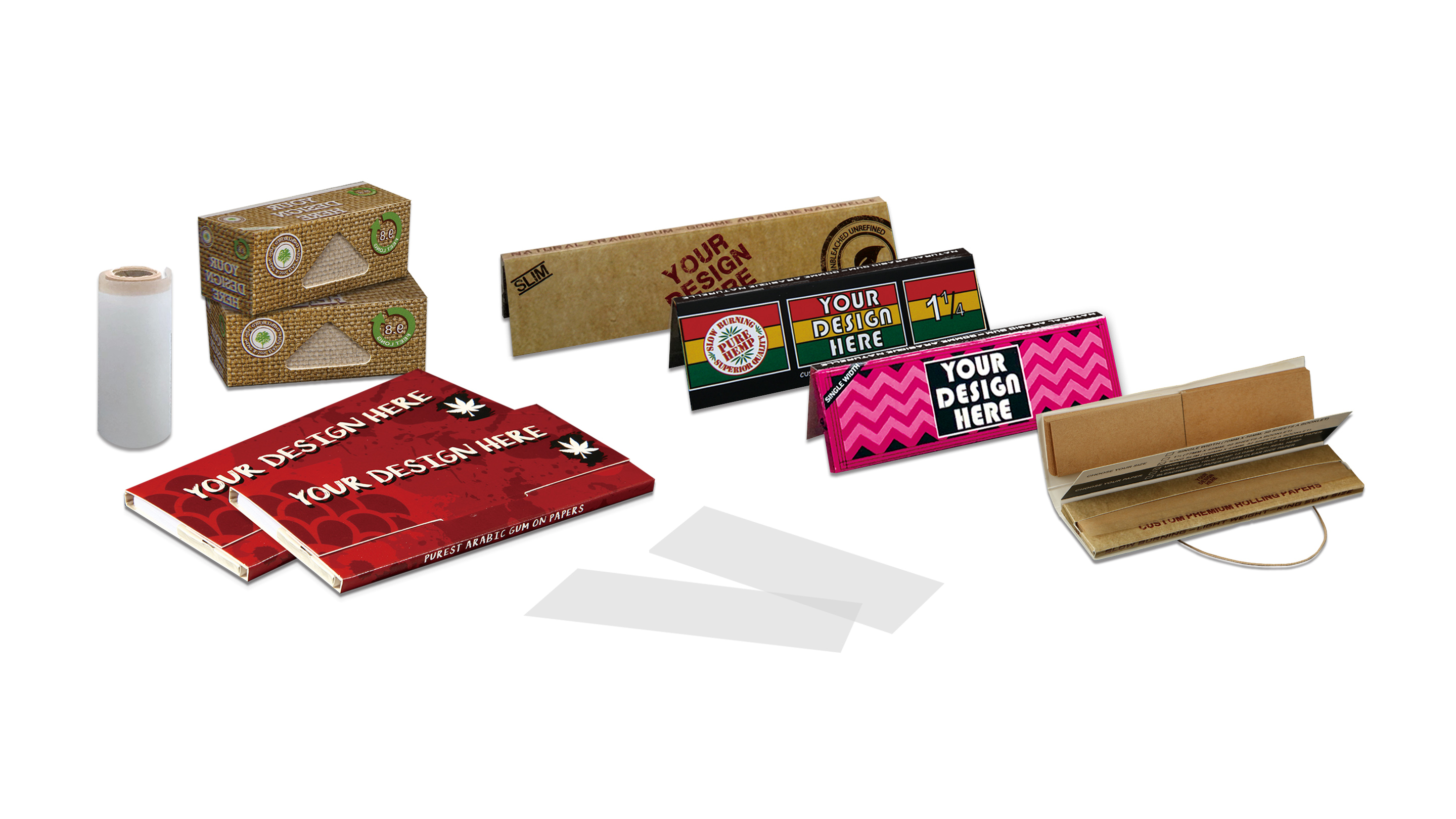
Every configuration listed above is available through RYOP's custom rolling papers collection, with options to mix and match materials, sizes, and print coverage based on your specific project.
Paper Material Breakdown: Rice, Unbleached & Ultra-Thin
Choosing the right material is the single most important decision you'll make — more important than your artwork, your booklet count, or even your budget. Here's why each material behaves differently and who it's best suited for.
Rice Paper
Rice papers are the thinnest option out there in 2026, typically ranging from 10 to 13 GSM. They're nearly translucent, which gives them a clean, minimalist aesthetic that premium brands love. The burn rate is exceptionally slow and consistent, and because rice fiber produces very little ash, the overall experience feels refined.
The trade-off? Rice papers can be trickier to roll by hand — especially for beginners — because that thinness makes them less forgiving of uneven packing. They're also more sensitive to humidity during storage, so proper packaging really matters. Fair warning: if your target audience skews toward first-time users, rice paper might not be the friendliest choice.
Unbleached Wood Pulp
This is the workhorse of the custom paper world. Unbleached papers typically range from 14 to 18 GSM, giving them a natural tan or light brown color. They're easy to handle, forgiving to roll, and they accept ink beautifully — which makes them ideal for full-coverage print designs.
Unbleached wood pulp burns at a moderate rate. It's not quite as slow as rice, but it's predictable and even. For bulk promotional orders where you want maximum visual impact and easy handling, this is the go-to. Around 61% of all custom rolling paper orders in 2025 used unbleached wood pulp as the base — and that trend's carried right into 2026.
Ultra-Thin Blends
Some manufacturers offer proprietary blends that combine rice and flax or rice and plant cellulose to hit sub-12 GSM thickness without sacrificing structural integrity. These are the "flagship" options — premium pricing, premium feel, premium burn. They're worth the investment for luxury brand positioning or limited-edition product launches. But they're overkill for high-volume promo giveaways where cost-per-unit matters most.
Printing Methods That Won't Fade or Flake
Your design is only as permanent as the printing method behind it. In 2026, three primary technologies dominate the custom rolling paper space — and each one serves a different purpose.
Soy-Based Ink Offset Printing
This is the gold standard for large runs (5,000+ booklets). Offset delivers razor-sharp detail, consistent Pantone color matching, and excellent adhesion to unbleached substrates. The soy-based formulation is food-grade and free of petroleum-derived solvents — which matters a lot if your brand positioning leans into clean-ingredient messaging.
The downside? Setup costs run higher because physical plates need to be created for each color layer. For orders under 2,000 booklets, offset usually doesn't make financial sense.
Digital Printing
Digital is the disruptor here. No plates. No setup fees. Full CMYK color on every booklet, plus the ability to print variable data — meaning each booklet in a batch can carry a different design, a unique QR code, or sequential numbering. That's huge for event planners running multi-brand activations, or for companies A/B testing different cover designs in one order.
Quality has improved dramatically too. Most recipients honestly can't tell digital from offset at normal viewing distance. The only real limitation? Metallic or fluorescent inks — those still need offset or specialty processes.
Watermark Printing
Watermarks are pressed directly into the paper during manufacturing — not printed on top. They're visible when held up to light and add a layer of authenticity and brand sophistication that surface printing simply can't replicate. Think of it as the rolling paper equivalent of a security feature on currency.
Watermarks are especially popular with heritage brands and premium product lines. They do require higher MOQs — typically 5,000+ booklets — because the imprint is integrated into the paper production process itself.
Design Tips That Turn Papers Into Keepsakes
Let's talk design — because even with the best paper stock and the sharpest printing, a boring layout will sink your project. Here are the principles that separate forgettable booklets from the ones people actually keep.
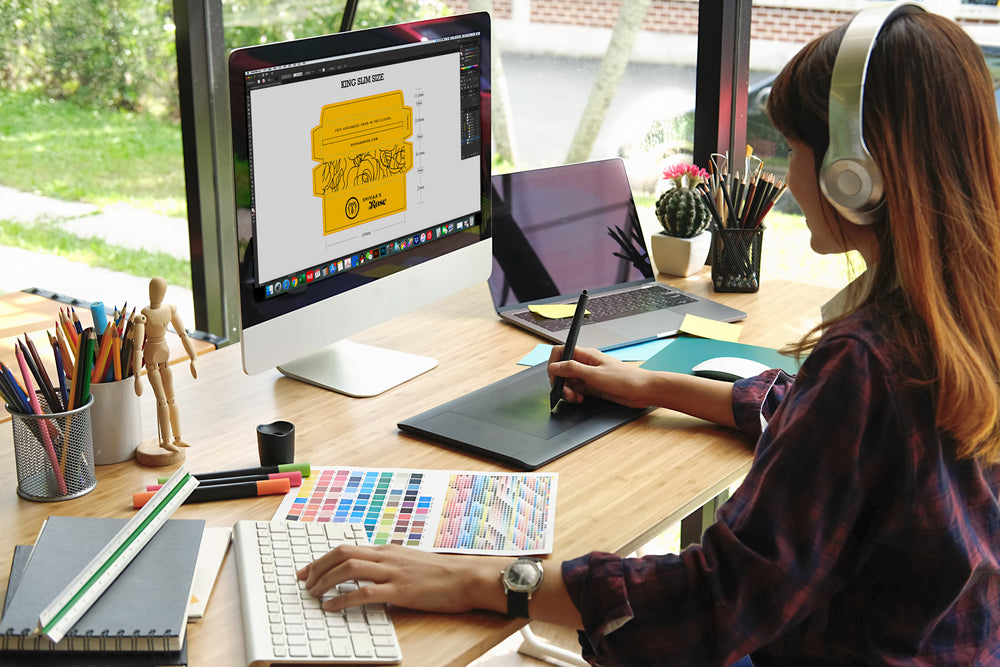
Treat the Cover Like a Business Card
Your booklet cover gets roughly 3 seconds of attention before someone decides to pocket it or toss it. That's it. Three seconds.
So your logo, your color palette, and your core message need to register instantly. Avoid cluttered designs. White space isn't wasted space — it's breathing room for your brand.
Add a QR Code (But Make It Useful)
QR codes on custom papers have exploded in 2026 — but most brands are doing them wrong. A QR code that links to your homepage? Boring. Who's scanning that? Instead, link to an exclusive playlist, a discount code landing page, a limited-edition product drop, or a behind-the-scenes video. Give people a reason to actually pull out their phone.
Pro tip: use a dynamic QR code service so you can swap the destination URL after the booklets are printed. That way, your papers stay relevant long after the initial campaign wraps.
Consider the Inside Flap
Here's what most people miss — the inside of the booklet cover is prime real estate that almost nobody uses. You've got a flat, printable surface that every single user sees when they open the booklet. Put a coupon code there. A witty one-liner. An Instagram handle. Something that rewards the person for actually opening your product.
Color Psychology Isn't Just a Buzzword
Matte black booklets with gold foil accents signal luxury. Kraft brown with earthy green says organic and eco-friendly. Bright neon screams festival energy. Your color choices prime the buyer's expectations before they ever read a word of text. A 2024 packaging design study found that color-driven packaging increased brand recall by 42% compared to text-only designs. When you're fighting for shelf attention, that number matters.
Quick Design Checklist for 2026
Before you finalize your artwork, run through these questions:
- Is the logo readable at booklet size (roughly 75mm × 45mm for a standard 1¼ cover)?
- Are you using CMYK color mode, not RGB? (RGB will shift during print production — every time.)
- Is your bleed set to at least 3mm on all edges?
- Does the design work on both the front cover AND the individual sheets?
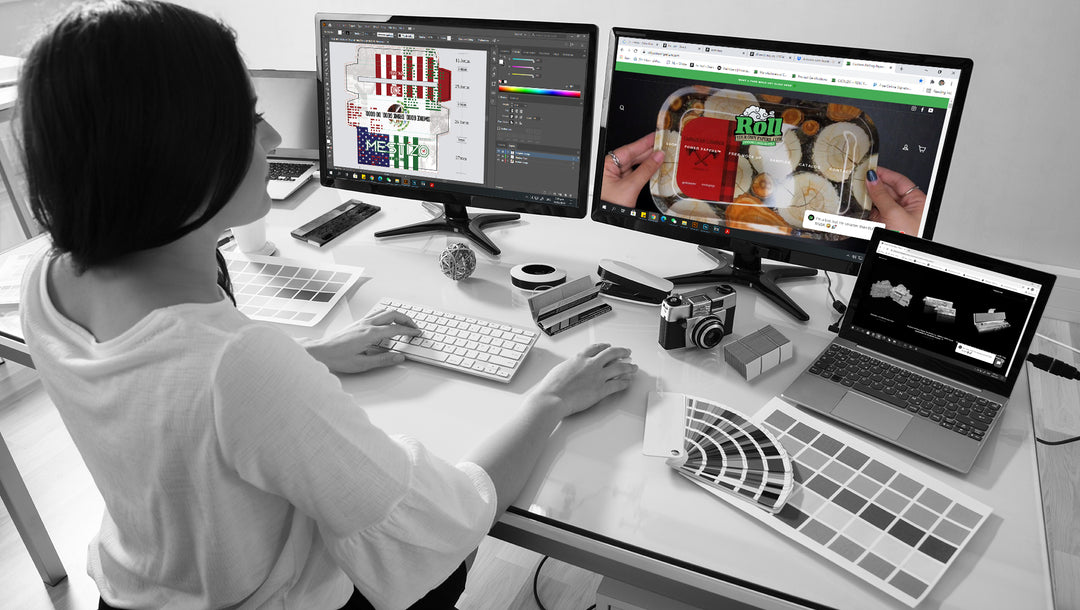
- Have you proofed the artwork at actual print size — not just zoomed in on a monitor?
Bulk Ordering for Brands, Events & Corporate Gifting
Event planners — this one's for you. Custom rolling papers have quietly become one of the most requested swag items at music festivals, brand activations, trade shows, and private gatherings. And the numbers explain why.
Think about it: a standard branded pen costs between $0.50 and $1.50 per unit and gets used a few times before disappearing into a junk drawer. A custom rolling paper booklet — with 32 leaves — costs roughly $0.40 to $0.90 per unit at bulk quantities and delivers 32 individual touchpoints with your brand. That's a cost-per-impression of about $0.01 to $0.03. Can you name another promo product with that kind of efficiency? Probably not.
How Brands Are Using Custom Papers in 2026
The use cases have expanded far beyond what anyone predicted:
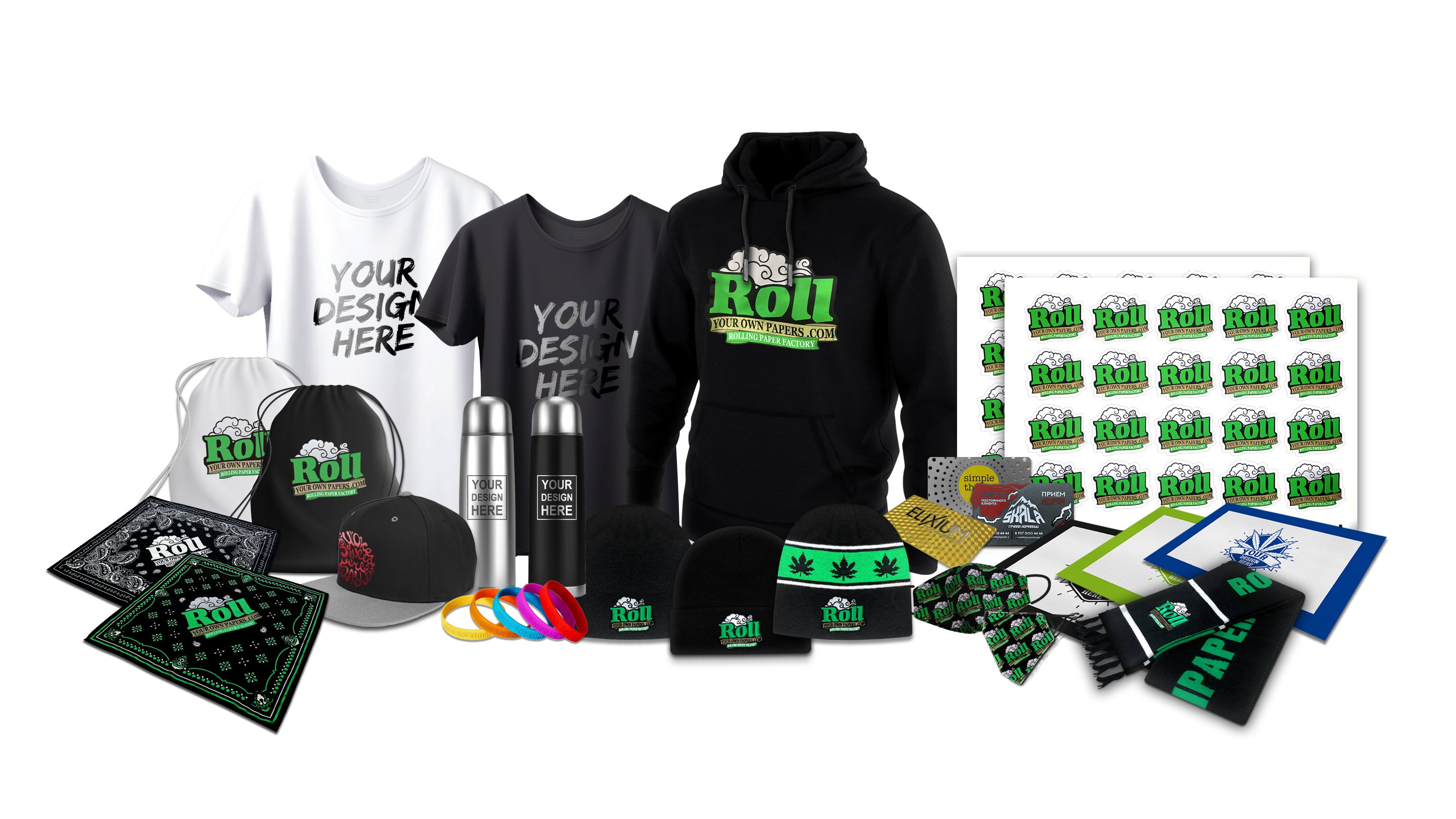
- Festival merch tables: Artists and performers are bundling branded papers with vinyl and apparel.
- Dispensary loyalty programs: Custom booklets as a free add-on when customers hit purchase thresholds.
- Corporate gifting: Luxury booklets in custom tins as high-end client gifts. (Yes — Fortune 500 companies are doing this.)
- Wedding favors: Personalized papers with the couple's names and date — a trend that grew 35% year-over-year according to event industry data.
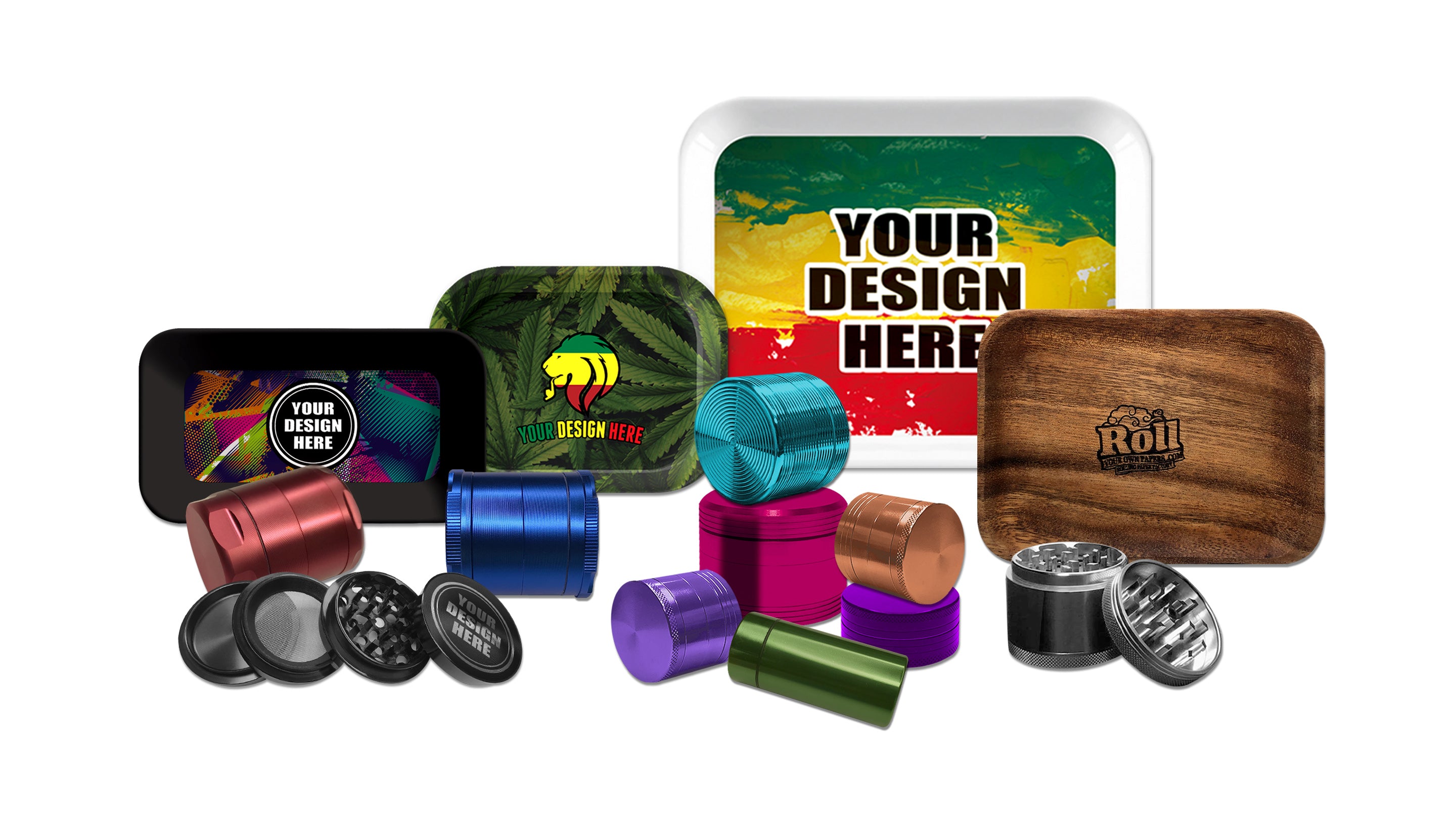
- Product launch kits: Papers included alongside grinders, trays, and tips as a branded starter bundle.
What to Look for in a Bulk Supplier
Not all bulk suppliers are created equal. When you're committing to thousands of booklets, you need assurance on five fronts: print consistency across the entire run, material certifications (FSC, organic, food-grade ink), reliable lead times with buffer for shipping delays, responsive customer support for last-minute artwork tweaks, and — this is the big one — proof samples before full production.
RYOP provides proof samples on all orders over 2,500 units, so you can physically inspect paper weight, print quality, and color accuracy before the presses roll on your full batch. For any serious B2B buyer, that's non-negotiable.
MOQ, Lead Times & Pricing in 2026
So what's the minimum order quantity for custom rolling papers? It depends on the supplier and the printing method, but in 2026 the industry standard ranges from 250 booklets (digital short-run) to 5,000 booklets (offset with watermark). RYOP's entry point sits at the lower end of that range, which makes it accessible for smaller brands and first-time buyers.
Pricing Tiers You Should Know
Pricing follows a predictable curve: the more you order, the cheaper each unit gets. Here's a general framework based on 2026 market rates for 1¼-size unbleached booklets with full-color covers:
| Order Quantity | Estimated Cost Per Booklet | Turnaround Time | Best Printing Method |
|---|---|---|---|
| 250–999 | $1.20 – $1.80 | 7–10 business days | Digital |
| 1,000–4,999 | $0.65 – $1.10 | 10–14 business days | Digital or Offset |
| 5,000–19,999 | $0.40 – $0.70 | 14–21 business days | Offset |
| 20,000+ | $0.25 – $0.45 | 21–30 business days | Offset with watermark option |
That said — these are baseline ranges. Add-ons like gold foil stamping, embossed covers, custom tin packaging, or specialty gum lines will push unit costs higher. Always request an itemized quote so you know exactly where every dollar's going.
Lead Time Realities
Here's a number that surprises people: nearly 40% of custom paper orders in 2025 experienced at least a one-week delay due to artwork revisions — not production or shipping. The lesson? Finalize your artwork before you place the order. Most delays are self-inflicted.
If you're ordering for a specific event, build in a two-week buffer beyond the quoted turnaround. Freight logistics in 2026 are more stable than they were a few years back, but customs processing for international orders can still throw curveballs. Plan accordingly.
Mistakes That Cost You Money (And How to Dodge Them)
After years of watching orders come through, patterns emerge. These are the most common — and most expensive — mistakes buyers make with custom rolling paper orders. Every single one is avoidable.
Mistake #1: Uploading RGB Artwork
This is the most frequent issue. Full stop. RGB (Red Green Blue) is for screens. CMYK (Cyan Magenta Yellow Key/Black) is for print. Upload an RGB file and your bright reds will print as muddy brick tones. Your electric blues? Dull navy. Convert to CMYK in your design software before exporting. It takes 10 seconds and saves you from reprinting an entire batch.
Mistake #2: Ignoring the Gum Line
Your design can't extend over the adhesive gum strip. Sounds obvious, right? You'd be surprised how many designers forget to account for it in their layout template. The gum strip is typically 3–5mm wide and runs along one edge of every sheet. Your artwork template should clearly mark this zone as a no-print area.
Mistake #3: Ordering the Wrong Size
A 1¼ paper and a King Size paper serve different audiences. King Size is the go-to for experienced users who prefer longer sessions and larger herbal blends. 1¼ is more compact, more portable, and friendlier for newcomers. If you're producing promotional giveaways, 1¼ is usually the safer bet because it appeals to a broader crowd. But if you're targeting seasoned enthusiasts or premium retail shelves? King Size signals quality.
Mistake #4: Skipping the Proof Sample
We mentioned this earlier, but it bears repeating: don't approve a full production run without physically holding a proof. Screen colors lie. What looks perfect on your MacBook might look completely different on paper — especially on unbleached substrates where the tan base color shifts every hue slightly warmer.
Mistake #5: Underestimating Quantity Needs
Ordering too few is more expensive than ordering too many. Sounds counterintuitive, but the math checks out. If you order 1,000 booklets at $1.00 each and run out halfway through an event, reordering another 500 at a higher per-unit rate — because you've lost the volume discount — plus rush shipping ends up costing more than ordering 1,500 upfront. Estimate your distribution plan, add 20%, and order that number.
Mistake #6: Forgetting the Inside Cover
This is the free real estate we talked about in the design section. Over 55% of custom paper orders leave the inside cover completely blank. That's a missed opportunity. At minimum, put your website URL or a social media handle there. At best? Put a call-to-action that drives measurable engagement — a coupon code, a contest entry link, or a scannable QR code.
Mistake #7: Choosing Appearance Over Performance
A paper that looks stunning but burns unevenly or tears during rolling creates a negative brand association — the exact opposite of what you want. Always prioritize material quality first, then optimize your design within that material's capabilities. The best custom rolling papers balance both. But if you have to choose? Function wins every time.
🔥 Shop Custom Rolling Papers at RYOP
Get premium custom rolling papers for your brand, event, or personal use. Bulk pricing available.
- ✔️ Premium quality
- ✔️ Custom branding available
- ✔️ Bulk & wholesale pricing
- ✔️ Fast shipping worldwide
📦 Bulk orders available | 🚚 Fast shipping | 🌱 Eco-friendly options
Frequently Asked Questions
- What's the minimum order for custom rolling papers at RYOP? RYOP's minimum order quantities start as low as 250 booklets for digital short-run printing. For offset printing with advanced features like watermarks, the minimum typically kicks in at 5,000 booklets. The exact MOQ depends on your chosen paper material, booklet size, and print specs — so it's worth reaching out for a custom quote.
- How long does it take to receive my custom rolling paper order? Standard turnaround ranges from 7 business days for small digital orders to 30 business days for large offset runs over 20,000 units. Most mid-range orders (1,000–5,000 booklets) ship within 10 to 14 business days after artwork approval. International orders? Add another 5–10 days for customs and freight.
- Can I see a proof sample before committing to a full order? Yes. RYOP provides physical proof samples on orders above 2,500 booklets so you can verify paper weight, ink color accuracy, and overall quality before full production begins. For smaller orders, you'll get digital proofs for artwork approval.
- Do you offer eco-friendly or organic custom rolling papers? Absolutely. RYOP carries unbleached, chlorine-free paper options made from sustainably sourced plant fiber. Soy-based and food-grade water-based inks are used by default, and recycled chipboard cover options are available for brands that want to go all-in on environmental messaging.
- What file format should I use for my custom artwork? Submit your artwork as a high-resolution PDF in CMYK color mode with a minimum resolution of 300 DPI. Include 3mm bleed on all edges and convert all text to outlines. Adobe Illustrator (.ai) and Photoshop (.psd) files work too. But avoid RGB files — they'll cause color shifts during printing, every single time.
- Can each booklet in my order have a different design? Yes — if you're using digital printing. Digital supports variable data, which means each booklet can feature a unique design, a different QR code, or sequential numbering. It's ideal for event planners running multi-brand activations or companies testing multiple cover concepts in a single run.
- What's the difference between 1¼ size and King Size papers? A 1¼ paper measures approximately 78mm in length and is the most popular size for everyday use and promotional giveaways — it's compact and beginner-friendly. King Size papers measure about 110mm, offering a longer rolling surface suited for larger herbal blends and experienced users. King Size tends to be preferred for premium retail positioning, while 1¼ works best for high-volume distribution.


Leave a comment