
Herbal Event Promotional Products Worth Ordering in 2026

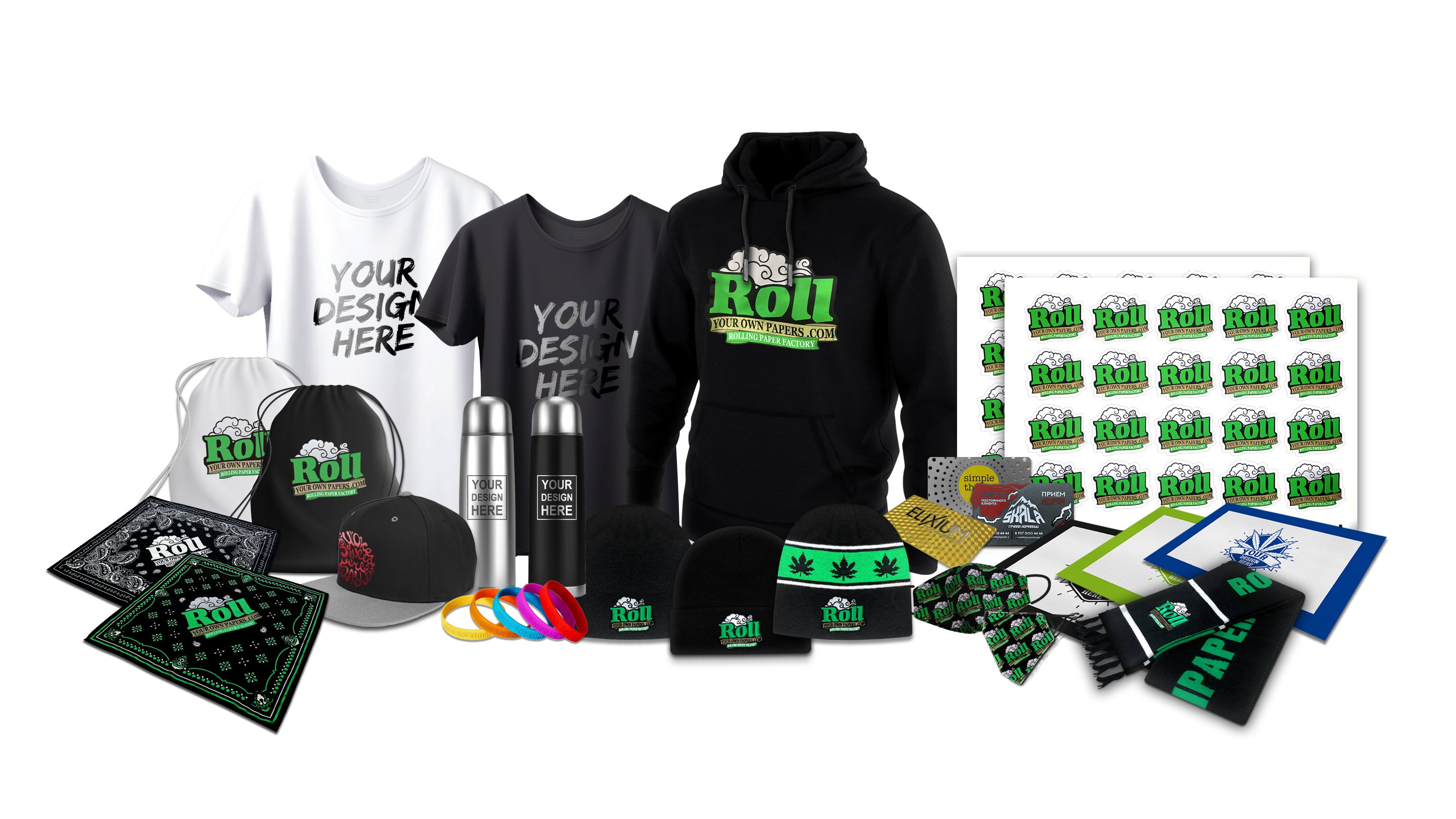
Herbal event promotional products — branded rolling accessories and related items handed out or sold at botanical festivals, brand activations, and community gatherings — are one of the most effective ways to get your logo into people's hands. And keep it there long after the event wraps up. Unlike generic pens or foam koozies, a custom-branded rolling accessory gets used over and over, racking up dozens of brand impressions per unit across weeks or even months.
Here's the thing — most guides on this topic just list product categories without telling you how to choose, when to order, or what actually performs at real-world events. We're going to fix that. Whether you're planning a cozy brand launch for 50 guests or a multi-day festival pulling in 10,000+ attendees, this breakdown covers the products, quantities, timelines, and creative strategies that separate forgettable swag from stuff people genuinely want to keep.
And honestly? The promotional product industry hit $26.1 billion in the U.S. alone in 2025. Specialty items — especially those tied to the booming herbal and botanical culture space — are growing faster than the category average. If you're not tapping into that momentum in 2026, you're leaving brand equity on the table.
Table of Contents
- Why Rolling Accessories Outperform Traditional Swag
- The Top 7 Herbal Event Promotional Products, Ranked
- Side-by-Side Product Comparison
- B2B Ordering Strategy: MOQs, Lead Times & Budgeting
- Design Tips That Maximize Brand Recall
- The Event-Size Playbook: What to Order for 50 vs. 5,000 Guests
- 5 Mistakes Event Planners Make With Promotional Products
- The Sustainability Angle: Eco-Friendly Options That Resonate
- Creative Distribution Tactics Beyond the Swag Bag
- Frequently Asked Questions
Why Rolling Accessories Outperform Traditional Swag
The short answer? Utility plus cultural relevance equals retention. A branded rolling accessory doesn't just sit in a drawer — it gets pulled out, passed around among friends, and seen by fresh eyes every single time. That's the magic of functional promo items in the herbal space.
Let's put this in perspective. Industry data consistently shows that items people see as useful get kept for an average of 7–12 months. Compare that to printed flyers — trashed within hours — or branded stress balls, forgotten within days. Rolling accessories sit right in that sweet spot of high perceived value and high daily-use frequency.
But there's a deeper play here. When someone pulls out custom rolling papers with your logo on them during a botanical session with friends, your brand becomes part of the ritual. That's not just an impression — it's an emotional association. You can't buy that kind of loyalty with a Google ad.
The Numbers Don't Lie
According to surveys of event organizers in the lifestyle and botanical sectors, over 72% report that attendees are more likely to remember a brand when the promotional item connects directly to the event's theme. A branded rolling paper at an herbal festival isn't random swag — it's contextually perfect. And context drives conversion.
On top of that, the cost-per-impression for rolling accessories is remarkably low. A single booklet of branded papers might run $0.40–$1.50 at wholesale, yet it generates an estimated 50+ brand impressions over its lifespan. Try getting that kind of ROI from a trade show pen.
The Top 7 Herbal Event Promotional Products, Ranked
Not all event merch is created equal. Here's our ranking based on three criteria: cost efficiency at scale, brand visibility, and how long the item stays in someone's possession. We've worked with hundreds of brands and event organizers — so this isn't theory. It's what we've actually seen perform.
1. Custom Rolling Papers
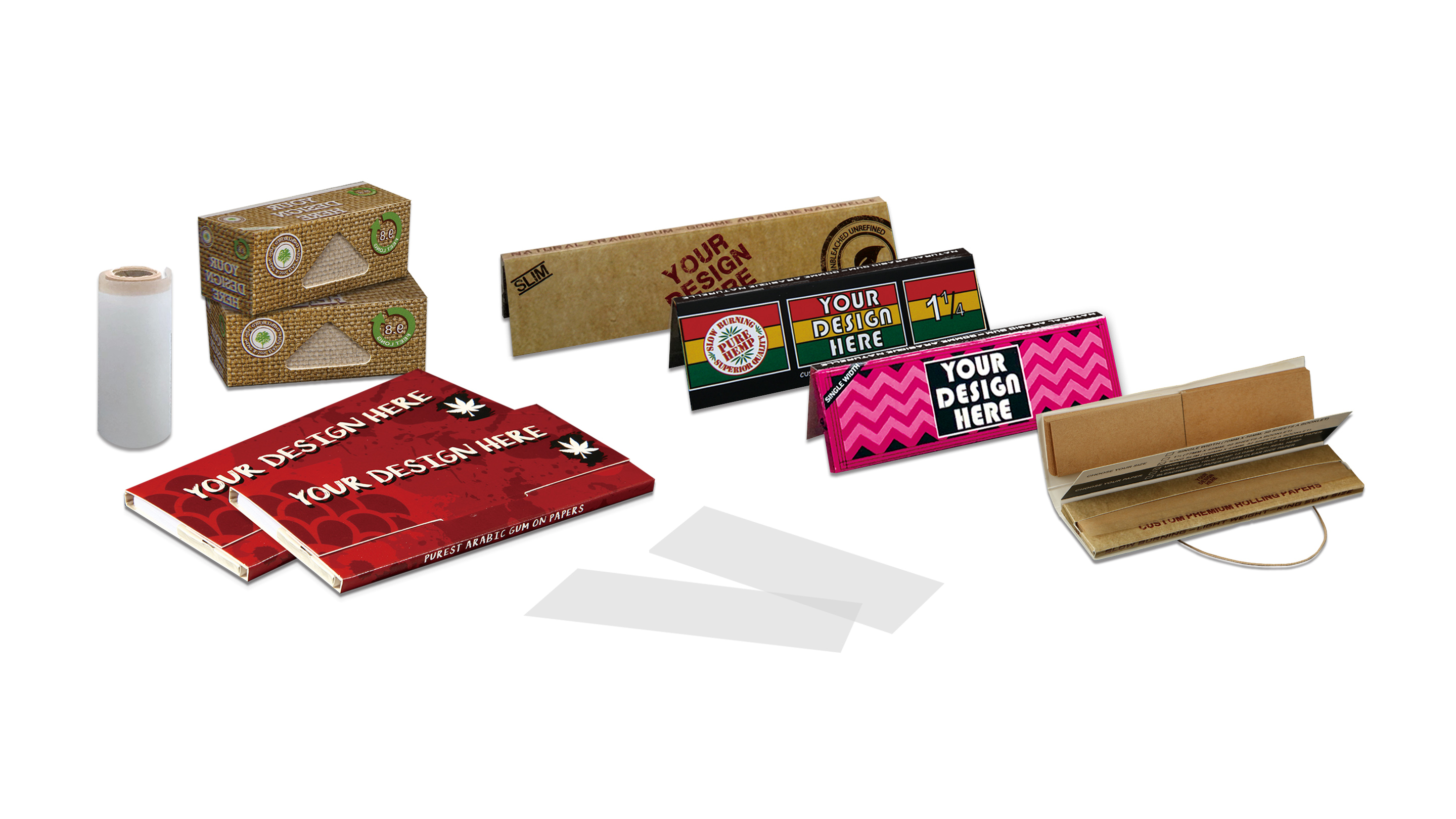
The undisputed champion. Custom rolling papers offer the largest printable canvas relative to their cost, and they're the single most-requested item at herbal events. You can print full-color artwork on the paper pack, the papers themselves, or both. They come in standard, king-size, and slim formats — versatile enough for any audience segment.
Why do they rank first? Lowest per-unit cost at scale, highest cultural relevance, and every single paper used is a brand touchpoint. Nothing else comes close on impressions-per-dollar.
2. Custom Pre-Rolled Cones
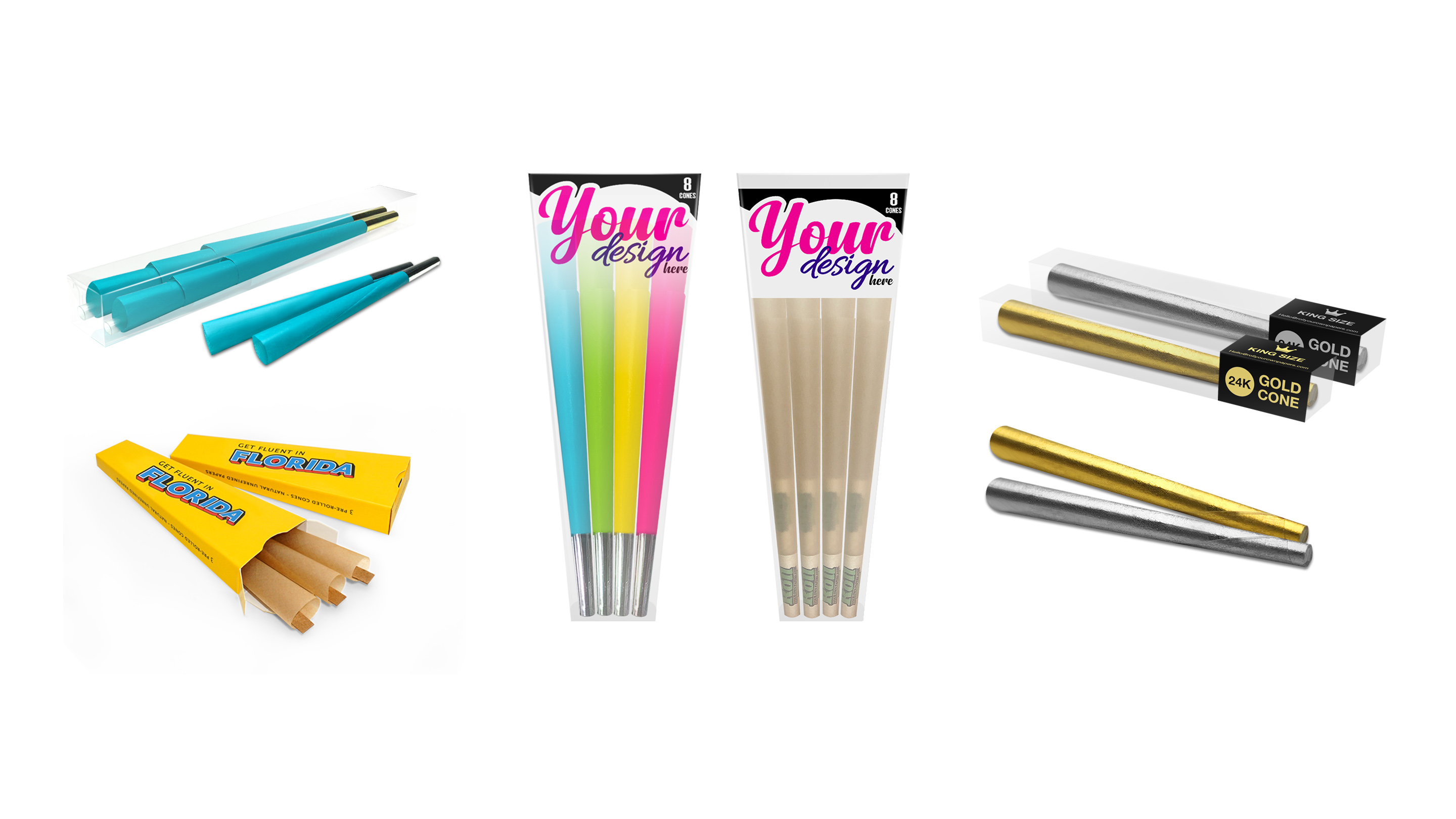
For attendees who'd rather not roll their own, custom pre-rolled cones are a premium upgrade. They feel more "gifted" than flat papers, and the cone packaging gives you another branding surface. Think of them as the VIP version of the rolling paper giveaway.
Worth noting: cones are especially popular at ticketed events and brand activations where you want to signal quality over quantity.
3. Custom Lighters
Everyone needs a light. That's just reality. Custom lighters are among the longest-lasting promotional items because people use them daily — for candles, grills, herbal sessions, you name it. A branded lighter lives in pockets and on countertops for months, quietly accumulating hundreds of brand impressions without any extra effort from you.
4. Branded Herb Grinders
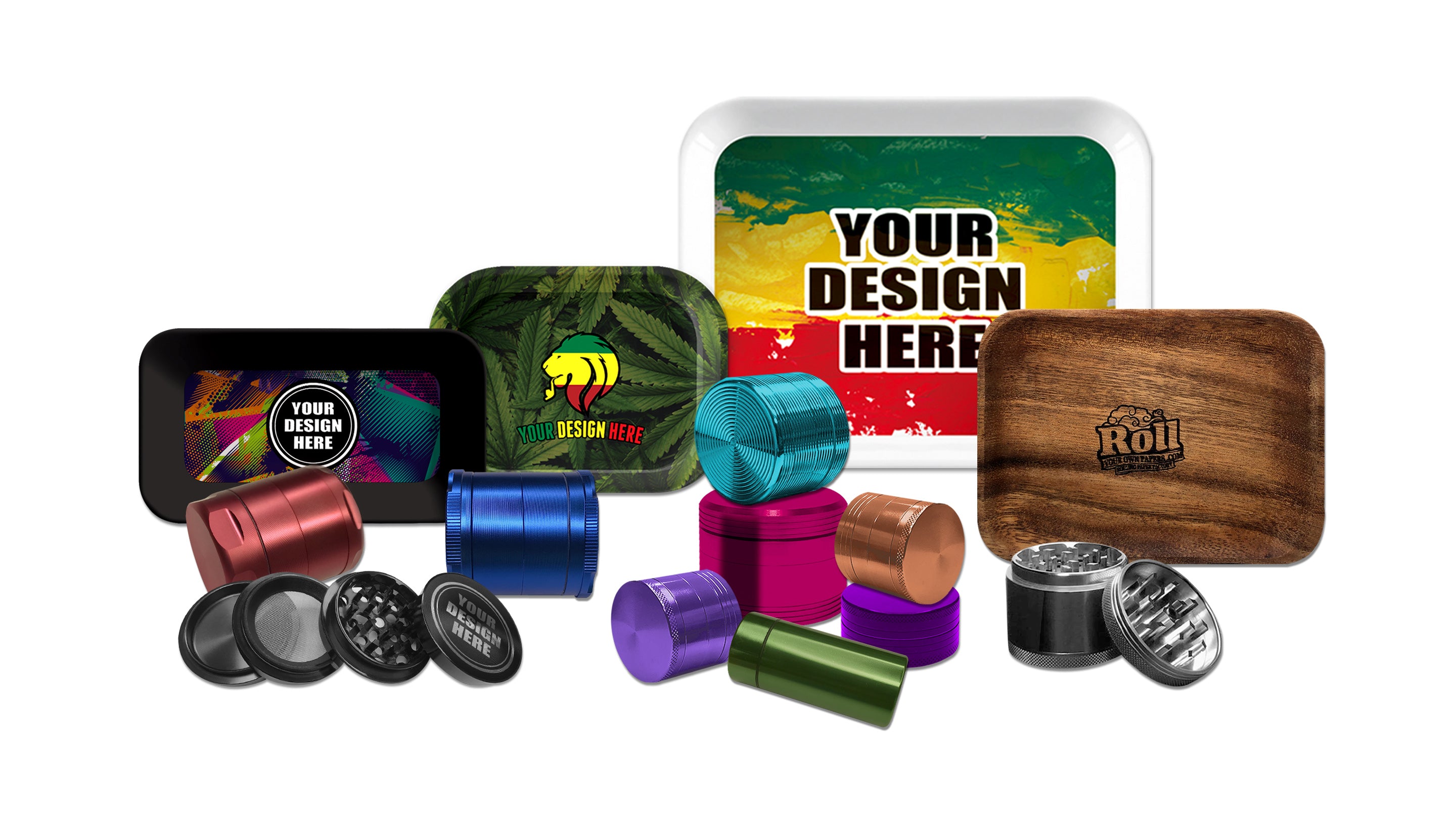
Here's what most people miss about herb grinders as promo items — they have the highest perceived value of anything on this list. A quality metal grinder with your logo laser-etched or pad-printed onto the surface feels like a real gift, not disposable swag. They're ideal for VIP activations, influencer kits, and loyalty rewards.
The trade-off? Higher per-unit cost means they work best for smaller, higher-impact distributions rather than mass giveaways.
5. Custom Rolling Trays
A premium rolling tray with your branding becomes a permanent fixture in someone's home. It's essentially a small billboard sitting on a coffee table or shelf — visible not just to the owner, but to every guest who walks through. The print area is generous, so bold artwork and full branding are easy to pull off.
6. Custom Filter Tips
Small, lightweight, and dirt cheap to produce in bulk — custom filter tips are the unsung hero of event promo kits. They pair naturally with rolling papers and cones, and they're the kind of item people grab a handful of without hesitation. Smart brands print a QR code, website URL, or social handle directly on each tip booklet.
7. Custom Matchbooks
There's something undeniably nostalgic about custom matchbooks. They evoke a retro aesthetic that photographs beautifully, makes great social media content, and adds a tactile, artisanal feel to any event. Matchbooks work particularly well for brand launches, pop-ups, and curated experience events where ambiance matters.
Side-by-Side Product Comparison
Here's a quick-reference table so you can compare these products across the metrics that actually matter for event planning. Use it to match the right item to your budget, audience size, and branding goals.
| Product | Approx. Cost Per Unit (Bulk) | Estimated Brand Impressions | Best For | Typical MOQ |
|---|---|---|---|---|
| Custom Rolling Papers | $0.40 – $1.50 | 50+ per booklet | Mass giveaways, festivals | 1,000 units |
| Pre-Rolled Cones | $0.60 – $2.00 | 10–15 per pack | VIP kits, premium activations | 1,000 units |
| Custom Lighters | $1.50 – $3.50 | 200+ per lighter | General giveaways, everyday carry | 500 units |
| Herb Grinders | $4.00 – $12.00 | 300+ per grinder | VIP gifts, influencer kits | 100 units |
| Rolling Trays | $5.00 – $15.00 | 500+ per tray | Premium gifts, retail displays | 100 units |
| Filter Tips | $0.15 – $0.50 | 20–30 per booklet | Add-on to kits, high-volume giveaways | 2,500 units |
| Matchbooks | $0.30 – $0.80 | 15–25 per matchbook | Pop-ups, brand launches, aesthetic | 1,000 units |
B2B Ordering Strategy: MOQs, Lead Times & Budgeting
Event planners — this one's for you. Getting the logistics right can make or break your entire promotional product strategy. Order too late and you're paying rush fees. Order too much and you're sitting on excess inventory. So let's break it down.
What's the Ideal Lead Time?
For custom-printed rolling accessories, plan for 2–4 weeks of production time after artwork approval. If your event falls during peak festival season (April through September), tack on an extra week as a buffer. Rush orders are sometimes possible, but they'll typically cost 15–25% more.
The golden rule? Finalize your order at least 6 weeks before your event date.
Understanding MOQs
Minimum order quantities vary by product. Papers and cones typically start at 1,000 units — manageable for most mid-size events. Grinders and trays often have lower MOQs, sometimes as low as 100 units, because their per-unit cost is higher. Filter tips, being so inexpensive, usually require higher minimums of 2,500+ to make the production run viable.
Budgeting: The 60/25/15 Rule
Here's a framework that works well for event promotions in the herbal space. Allocate 60% of your promotional product budget to your hero item — the one thing every attendee should walk away with (usually custom papers or lighters). Put 25% toward a secondary item that adds perceived value to VIP kits or special activations — think cones, grinders, or trays. Reserve the remaining 15% for surprise-and-delight extras like matchbooks or filter tips you can distribute creatively.
So for a $5,000 promo budget? That's $3,000 on your main giveaway, $1,250 on premium items, and $750 on add-ons. That allocation typically covers a 2,000-person event comfortably.
Wholesale Pricing Tiers
Most suppliers — RYOP included — offer tiered pricing that drops significantly at 2,500, 5,000, and 10,000+ unit thresholds. If you're hovering near a price break, it's almost always worth bumping your order up to hit the next tier. The per-unit savings compound fast.
Quick example: ordering 5,000 custom paper booklets instead of 4,500 might save you $0.10 per unit — that's $500 in savings for spending just a bit more upfront. Why wouldn't you?
Design Tips That Maximize Brand Recall
A beautifully designed promotional product doesn't just look good — it gets photographed, shared on social media, and kept longer. About 68% of consumers say they've posted a photo of a promotional product they received at an event. Your design directly influences whether your item becomes social content... or landfill material.
Keep the Logo Clean and Readable
This sounds obvious. But you'd be surprised how many brands try to cram their entire visual identity onto a 3-inch rolling paper booklet. Use your logo, a tagline or URL, and maybe one accent graphic. That's it. Negative space is your friend here.
Choose Colors That Pop Against the Product
If you're printing on natural unbleached papers (which have a tan/brown base), avoid earthy tones that'll blend in. Go high-contrast — black, white, bright red, neon green. The goal is instant visual recognition from arm's length.
Include a Call to Action
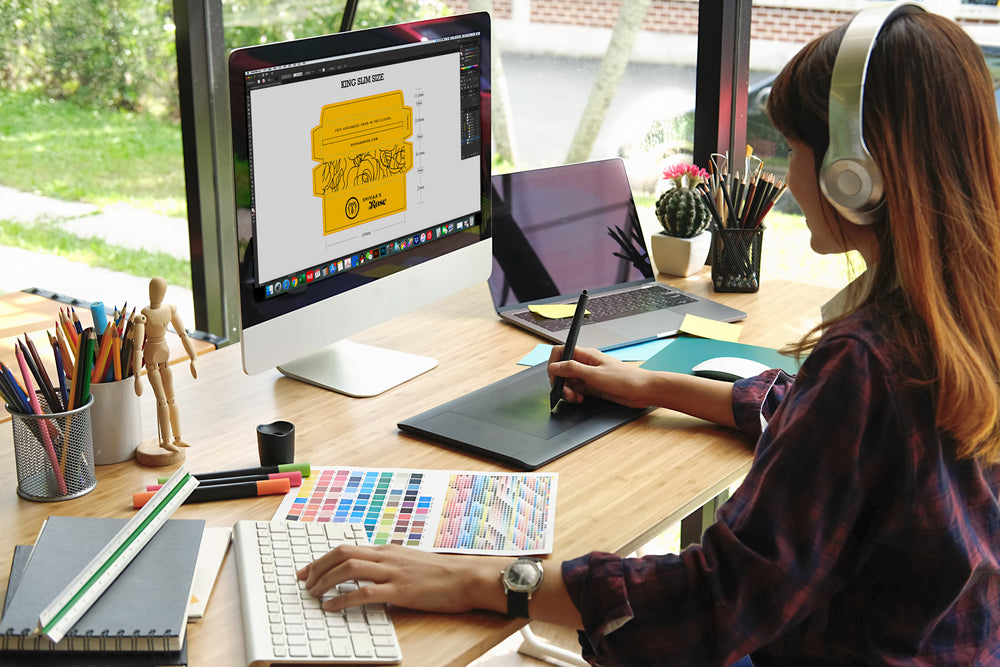
Don't just brand the item — tell people what to do next. A QR code linking to your website, a social media handle, a discount code for their first online order. Every promotional product should have a clear next step baked into the design.
Fair warning — if you skip this, you're leaving measurable ROI on the table.
Think About the Unboxing Moment
For items distributed in kits or packaging, the reveal matters. A custom paper booklet wrapped in tissue paper inside a branded box creates a premium experience that costs maybe $0.50 extra — but doubles the perceived value. That said, this approach works best for smaller, curated events rather than mass giveaways where speed of distribution is the priority.
The Event-Size Playbook: What to Order for 50 vs. 5,000 Guests
Not every event is a massive festival. Your product mix should scale with your audience. Here's what we recommend based on real-world event data:
Intimate Events (50–200 Guests)
Think brand launches, private tastings, or influencer dinners. For these, quality beats quantity every time. Build a curated kit with a grinder, a pack of pre-rolled cones, and a booklet of custom rolling papers. Package everything in a branded box or pouch. Budget $8–$20 per attendee for the kit, and you'll create something people genuinely treasure.
At this scale, you can also personalize. Add a handwritten note. Include the attendee's name on the packaging. Match the kit to the event's color scheme. These details matter in small settings — more than you'd think.
Mid-Size Events (200–2,000 Guests)
This is where the 60/25/15 budget rule really shines. Your hero item (papers or lighters) goes to everyone. Pre-rolled cones or grinders go to the first 200 arrivals or VIP ticket holders. Matchbooks and filter tips get scattered across tables, bars, and activation zones.
Make sure you've got 10–15% more units than your expected attendance — there's always unexpected foot traffic. And running out early is way worse than having leftovers.
Large Events & Festivals (2,000–10,000+ Guests)
At this scale, simplicity and speed are everything. You need an item that can be distributed in under two seconds — which means individual rolling paper booklets or matchbooks win. Forget elaborate kits. Station branded ambassadors at entry points and high-traffic zones. Order 20% above your attendance estimate because large events almost always see higher-than-projected foot traffic.
Pro tip: for festivals, consider partnering with food or beverage vendors to distribute your branded items at their booths. It's a win-win — they add value to their customer experience, and you expand your reach without extra staffing costs.
5 Mistakes Event Planners Make With Promotional Products
We've seen these errors hundreds of times. Learn from other people's missteps so you don't have to repeat them.
Mistake #1: Ordering Too Late
This is the single most common issue. Custom printing requires lead time, and rushing it either inflates your costs or compromises quality. If you're reading this and your event is less than three weeks out, you may still have options — but your product selection will be limited and you'll likely pay premium production fees.
Mistake #2: Choosing Products Your Audience Won't Use
Sound familiar? A brand buys 5,000 branded items without stopping to consider whether their specific audience actually wants them. Know your crowd. If you're targeting experienced herbal enthusiasts, they'll appreciate quality cones and grinders. If your audience skews younger or more casual, papers and lighters are the move.
Mistake #3: Ignoring Packaging
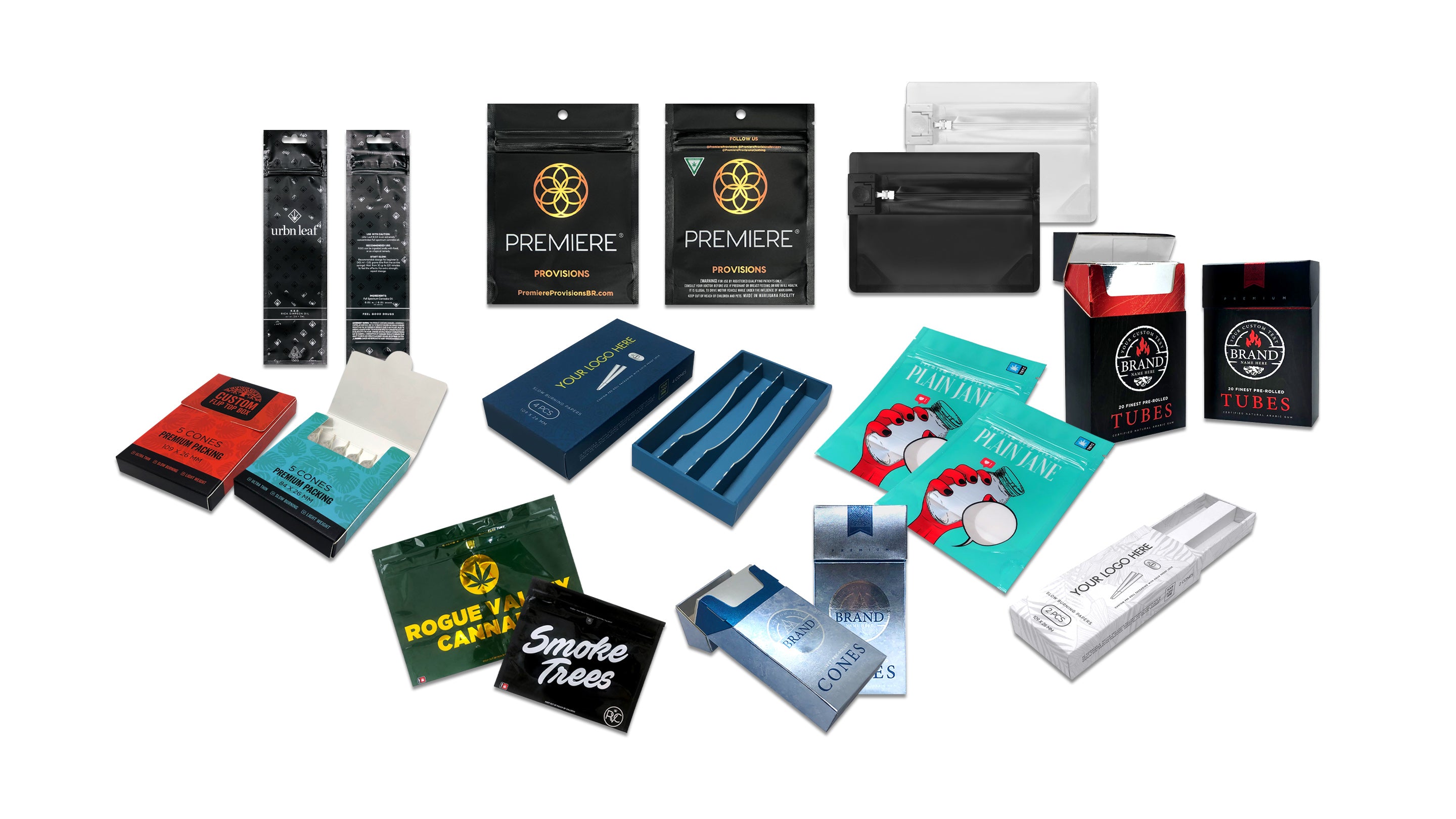
An incredible custom-designed rolling paper booklet loses half its impact when it's tossed loose into a generic tote bag alongside forty other items. How you present the item is almost as important as the item itself. Even a simple branded sticker sealing a cellophane wrapper elevates the whole experience.
Mistake #4: No Digital Bridge
Your physical promotional product should connect to your digital presence. Period. No QR code? No social handle? No URL? Then you've created a dead-end interaction. The whole point of event promo products is to start a relationship — not just create a moment.
Mistake #5: One-Size-Fits-All Distribution
Not every attendee should get the same thing. Create tiers. General admission gets the essentials — papers, matchbooks. VIP gets a premium kit. Influencers and press get the full experience with a grinder, tray, and the works.
This tiered approach costs roughly the same as giving everyone a mediocre mid-range item. But the impact on key audiences? Exponentially greater.
The Sustainability Angle: Eco-Friendly Options That Resonate
Let's be honest — in 2026, sustainability isn't optional for brands that want to be taken seriously. Over 81% of consumers say they prefer brands that demonstrate environmental responsibility. And that preference is even stronger in the herbal and botanical community.
What Makes a Rolling Accessory "Eco-Friendly"?
Several factors come into play: unbleached natural fibers for papers, FSC-certified packaging, soy-based or vegetable-based inks, recyclable or compostable outer wraps, and minimal plastic throughout the supply chain. When you're evaluating promotional product suppliers, ask specifically about each of these elements. Vague claims like "green" or "natural" aren't enough — you want specifics.
Eco Products as a Marketing Message
Here's a tactic that's gaining real traction: print your sustainability credentials directly on the product packaging. Something like "Printed with soy-based ink on unbleached natural fibers" right below your logo. It's not just transparent — it's a selling point. Attendees notice. And they share it on social media, which extends your reach organically.
If you're a brand manager reading this, think about how the sustainability story fits into your broader marketing narrative. Your event promotional products are a physical manifestation of your brand values. When those values include environmental stewardship, it creates the kind of authentic alignment that audiences actually trust.
Creative Distribution Tactics Beyond the Swag Bag
The standard approach — toss everything in a bag, hand it out at the door — works fine. But "fine" doesn't create buzz. Here are some distribution strategies that generate actual excitement and social media content.
The Treasure Hunt
Hide branded products throughout the venue. Post clues on social media during the event. Attendees who find hidden items post photos with your hashtag to claim a bonus prize. This turns a simple giveaway into an interactive experience. We've seen brands hit 3–5x the social engagement compared to traditional bag distribution.
The Rolling Station
Set up a dedicated area where attendees can sit down, relax, and use your branded accessories. Staff it with brand ambassadors who can demonstrate products, answer questions, and capture content. This works exceptionally well with rolling trays as the centerpiece — they naturally anchor the space and create a branded environment.
The Collab Drop
Partner with another brand at the event for a co-branded limited-edition product. A custom paper booklet featuring artwork from both brands creates urgency and collectibility. Limited runs of 500–1,000 units feel exclusive even at large events — and they're way more likely to be kept long-term.
The Post-Event Mailer
Here's a tactic almost nobody uses: collect email addresses at the event, then mail a branded accessory kit to attendees one week later. It re-triggers the positive event memory, creates a second touchpoint, and arrives when their excitement has had time to mature into genuine brand interest.
The cost? About $3–5 per mailer including shipping. The impact? Significantly higher conversion to website visits and social follows compared to event-day-only distribution.
Gamification at the Booth
Spin-a-wheel, scratch cards, or digital raffles where every participant wins something — but the prize tier varies. Everyone walks away with a branded paper booklet. Lucky winners get a grinder or a rolling tray. This creates lines at your booth (social proof), extends dwell time, and gives attendees a story to tell.
"I won a custom grinder at the booth" is infinitely more shareable than "I was handed a bag of stuff."
Seeding Through Vendors
Distribute your branded items through food trucks, bar setups, and retail vendors at the event. Attach a custom paper booklet or matchbook to every food order, for instance. This catches people in a moment of enjoyment and ties your brand to a positive experience — all without requiring your own booth space.
🔥 Find Your Perfect Rolling Accessories
Whether you're stocking up for personal use or ordering in bulk for your brand or event, RYOP has everything you need.
- ✔️ Premium quality products
- ✔️ Custom branding available
- ✔️ Bulk & wholesale pricing
- ✔️ Fast shipping worldwide
📦 Bulk orders available | 🚚 Fast shipping | 🌱 Eco-friendly options
Frequently Asked Questions
- What's the minimum order for custom event promotional products? It depends on the product. Custom rolling papers and pre-rolled cones typically start at 1,000 units. Herb grinders and rolling trays can go as low as 100 units. Filter tips usually require 2,500+ units. These thresholds keep per-unit pricing reasonable for both the manufacturer and the buyer.
- How long does it take to receive custom-branded products? Standard production takes 2–4 weeks after artwork approval, plus shipping time. During peak season (April through September), add an extra week as a buffer. Rush orders may be available for a premium. We always recommend placing orders at least 6 weeks before your event.
- Can I see a sample before placing a bulk order? Yes — most product categories offer sample options so you can evaluate quality, print fidelity, and materials before committing to a large order. It's a smart move, especially if you're ordering for the first time or testing a new product type for your brand.
- Do you offer eco-friendly promotional product options? Absolutely. Options include unbleached natural-fiber papers, soy-based inks, FSC-certified packaging, and minimal-plastic wrapping. Eco-friendly options are available across most product categories without significant cost increases at bulk quantities.
- What file formats do you need for custom artwork? For best results, submit vector files in AI, EPS, or PDF format at 300 DPI or higher. If you only have raster images (PNG, JPEG), ensure they're at least 300 DPI at print size. Most providers can also assist with design cleanup or minor adjustments before printing.
- Can I mix different products in a single order? Yes. Many event organizers build custom kits that combine papers, cones, filter tips, and lighters into a single branded package. Mixing products within one order is common and often encouraged — just note that each product type may have its own MOQ.
- What's the best promotional product for a large outdoor herbal festival? For events with 2,000+ attendees, custom rolling paper booklets and branded lighters offer the best balance of low per-unit cost, fast distribution speed, and high brand visibility. They're lightweight, easy to hand out at scale, and have proven high retention rates — most attendees keep them for weeks or months after the event.


Leave a comment