
Custom Cannabis Packaging: The Complete 2026 Guide to Branding & Compliance

Let's be real—your cannabis product could be the smoothest, most fire strain on the shelf, but if your packaging looks like it was designed in someone's basement in 2010, you're already losing the game. In 2026, custom cannabis packaging isn't just about slapping your logo on a mylar bag anymore. It's about compliance, brand storytelling, sustainability, and standing out in a market that's expected to hit nearly $2 billion this year. Whether you're launching your first dispensary, scaling to multiple states, or just tired of generic packaging that doesn't reflect your brand's vibe, this guide breaks down everything you need to know about cannabis promotional products, design trends, compliance nightmares (and how to avoid them), and practical tips that'll actually save you money and headaches. 🚀
📋 Table of Contents
- Why Custom Cannabis Packaging Actually Matters in 2026
- Types of Cannabis Packaging (And When to Use Each) 📦
- Compliance 101: Don't Get Shut Down Over Packaging ⚖️
- 2026 Design Trends That Actually Sell 🎨
- Sustainability: Not Just a Buzzword Anymore ♻️
- How to Choose a Cannabis Packaging Supplier (Without Getting Screwed) 🤝
- What Custom Packaging Actually Costs (Real Numbers) 💰
- Multi-State Packaging Strategies 🗺️
- Common Packaging Mistakes (And How to Avoid Them) ⚠️
- Frequently Asked Questions 💬
Why Custom Cannabis Packaging Actually Matters in 2026 🌟
Here's something that'll blow your mind: studies show that nearly 90% of customers make purchasing decisions based on product appearance before they even try it. In cannabis, where most flower looks pretty similar through a jar or bag, your packaging is doing the heavy lifting.
Think about it—when someone walks into a dispensary, they're staring at rows and rows of products. What makes them reach for yours? It's not just the THC percentage or the budtender's recommendation. It's the packaging that catches their eye first, tells them a story, and makes them think, "Yeah, this brand gets me."
But it's not just about looking pretty on the shelf. Custom cannabis packaging serves multiple critical functions that directly impact your bottom line:
- Brand Recognition: Consistent packaging creates brand memory. When customers see your signature colors, logo style, or unique packaging shape, they instantly recognize you—even from across the store.
- Premium Positioning: High-quality packaging signals high-quality product. It's psychology. Glass jars, soft-touch finishes, magnetic closures—these details justify premium pricing and attract customers willing to pay more for a better experience.
- Compliance Protection: Getting packaging compliance wrong can literally shut down your operation. The right marijuana accessories and packaging keep you legal and operating.
- Product Protection: Cannabis degrades when exposed to light, air, and moisture. Quality packaging preserves potency, terpenes, and freshness—which means happier customers and fewer returns.
The cannabis packaging market is projected to reach nearly $4 billion by 2030, growing at about 15% annually. That's not just growth—that's a complete industry maturation. Customers aren't just buying weed anymore; they're buying an experience, a lifestyle, and an identity. Your packaging needs to deliver on all three. ✨
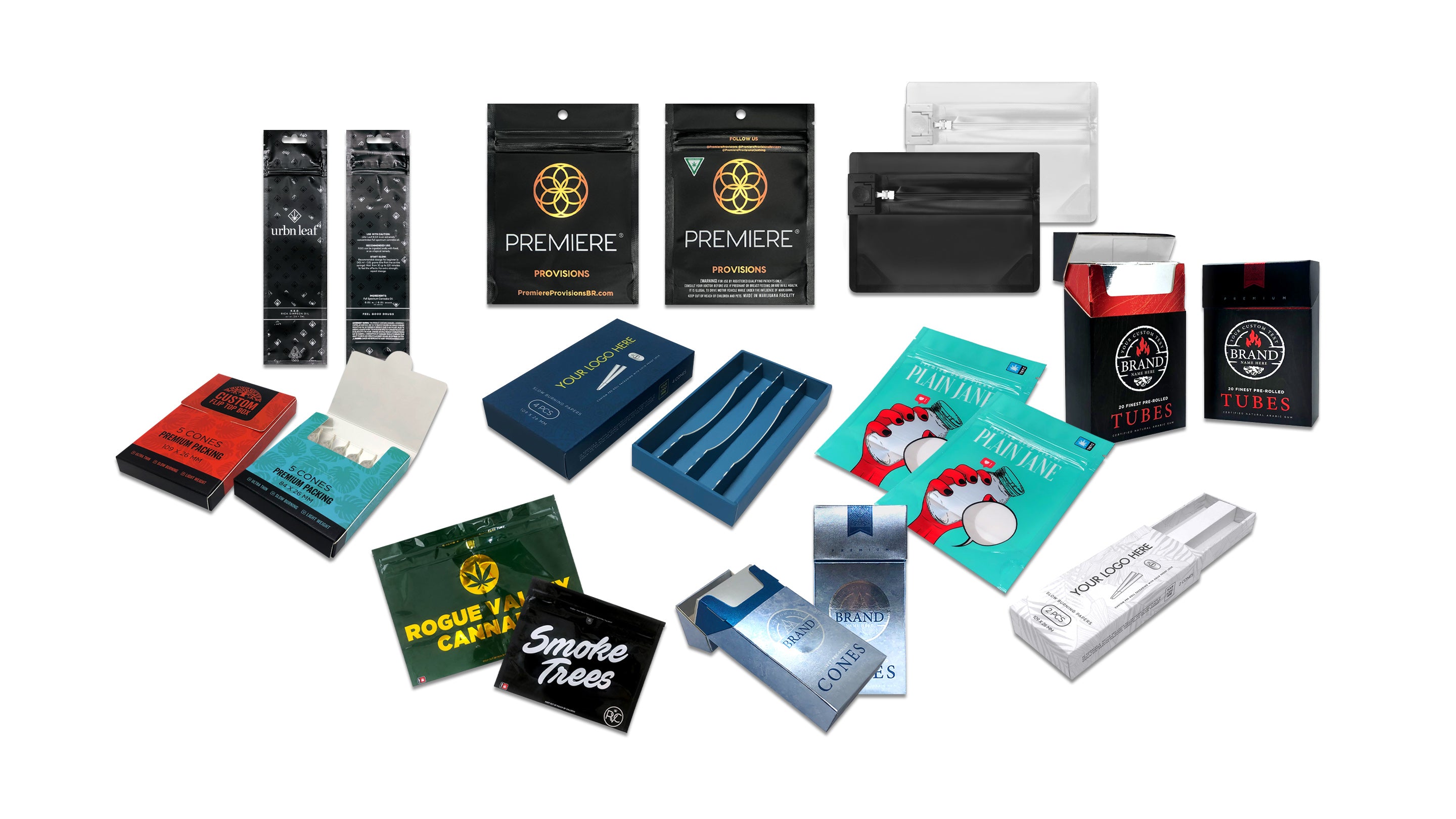
Types of Cannabis Packaging (And When to Use Each) 📦
Not all packaging is created equal, and what works for pre-rolls definitely won't work for concentrates. Here's the real-world breakdown of the most popular smoking accessories wholesale packaging options and when to use them.
Mylar Bags: The Industry Workhorse 💪
Mylar bags (polyester film bags) are the most popular choice for flower and edibles, and for good reason. They're affordable, lightweight, customizable, and provide excellent barrier protection against moisture, oxygen, and light. Most dispensaries use 4-5 mil thickness for durability.
When to Use Mylar:
- Flower packaging (1g to 56g+ sizes)
- Edibles (gummies, chocolates, baked goods)
- Pre-roll multi-packs
- Budget-conscious brands needing volume
Pro tip: Go with matte finishes instead of glossy—they feel more premium and avoid fingerprint smudges. Add a clear window only if your state allows it and your product looks incredible.
Glass Jars: Premium Positioning 🏆
Glass jars scream quality. They're non-reactive (won't affect taste or smell), airtight when sealed properly, and customers can see exactly what they're buying (where permitted). Amber and black glass options provide UV protection to preserve cannabinoids and terpenes.
When to Use Glass Jars:
- Premium flower lines
- High-end concentrates
- Medical cannabis products
- Brands targeting luxury or wellness demographics
Real talk: Glass costs more upfront, but customers perceive it as significantly higher value. If you can swing the extra cost, glass jars can justify 20-30% higher price points. That's real margin improvement.
Pre-Roll Tubes (Doob Tubes): Portable Protection 🚬
Pre-roll tubes are essential for single or multi-pack joints and blunts. They protect delicate pre-rolls from crushing, keep them fresh, and meet child-resistant requirements with pop-top designs.
Standard Sizes:
- 99mm tubes for standard 1g cones
- 116mm tubes for king-size or longer pre-rolls
- Glass options for premium branding
- Plastic for volume and cost efficiency
Exit Bags: The Final Touch 🛍️
Exit bags are often overlooked, but they're required in many states and represent your last brand touchpoint before customers leave. These opaque, child-resistant bags need to meet ASTM D3475 or 16 CFR 1700.20 certification standards.
Smart move: Custom-branded exit bags turn a compliance requirement into a marketing opportunity. When customers carry your bag around, that's free advertising everywhere they go.
🔥 See Also:
See also: Complete Guide to Cannabis Promotional Products: Lighters, Papers & Accessories (2025) 🎁
See also: Custom Rolling Papers vs. Generic: Why Branding Matters for Dispensaries 📜✨
Compliance 101: Don't Get Shut Down Over Packaging ⚖️
Compliance isn't sexy, but it's absolutely critical. Packaging violations can result in fines, product recalls, or even license suspension. Every state has different rules, and they're constantly changing. Here's what you absolutely need to know.
Universal Requirements (Pretty Much Every State) 🌐
While specifics vary, these requirements show up in almost every state's regulations:
- Child-Resistant Packaging: Must meet CPSC standards (16 CFR 1700.20)—85% of kids aged 42-51 months can't open it in 5 minutes, but 90% of adults aged 50-70 can. Test your packaging or get certified samples.
- Opaque or Resealable: Most states require packaging to be opaque (can't see through it) and resealable after opening. This applies especially to edibles.
- Warning Labels: Every state requires prominent warning statements about intoxication, pregnancy risks, and operating vehicles. Font size and placement matter.
- Lab Testing Info: THC/CBD content per serving and per package, testing date, lab name, and often QR codes linking to full Certificates of Analysis (COAs).
- No Appeal to Children: Zero cartoon characters, bright colors resembling candy, or language/imagery that could appeal to minors. Regulators take this extremely seriously.
State-Specific Quirks You Can't Ignore 🗺️
California 🌴
The golden state requires a specific universal symbol (black triangle with cannabis leaf), minimum 0.5" x 0.5" size, plus Proposition 65 warnings for THC products. Department of Cannabis Control (DCC) is strict about edibles packaging being completely opaque. Track everything through METRC.
Colorado 🏔️
Red "THC" diamond symbol is mandatory. All packaging must be opaque and reclosable. Use-by dates are required (maximum 9 months unless you have stability testing). New Extended Producer Responsibility (EPR) program requires packaging registration by July 31, 2025—don't miss this deadline or you'll face penalties.
Michigan 🚗
METRC tracking integration is mandatory. Child-resistant requirements are strictly enforced. Unique packaging and labeling rules for medical vs. adult-use products—don't mix them up or you'll trigger violations.
New York 🗽
One of the newest and most complex markets. Requires specific warning label formatting, child-resistant packaging testing documentation, and strict advertising restrictions. Office of Cannabis Management (OCM) has detailed packaging guidelines that change frequently—stay updated.
🚨 Pro Warning: Multi-state operators face the biggest compliance challenges. Don't assume packaging that works in California will pass in Massachusetts or Colorado. Budget for state-specific packaging runs or design the most restrictive compliant packaging that works everywhere (usually costs more but saves operational headaches).
2026 Design Trends That Actually Sell 🎨
The "stoner aesthetic" is dead. Cannabis packaging has matured dramatically, and consumers expect sophistication. Here's what's working right now in 2025.
Minimalism Wins the Shelf 🖼️
Clean, uncluttered designs with generous white space dominate premium cannabis brands. Think Apple's design philosophy applied to weed. Simple typography, one or two accent colors, and a clear focal point (usually your logo or product name). This approach signals quality and appeals to wellness-oriented consumers who want cannabis without the counterculture baggage.
Soft-Touch Matte Finishes with Metallic Accents ✨
The tactile experience matters. Soft-touch matte finishes feel luxurious and avoid fingerprints. Adding spot UV (glossy highlights on specific areas), foil stamping (gold, silver, rose gold), or embossing creates depth and premium perception. These finishing touches cost a bit more but dramatically increase perceived value.
Earth Tones and Nature-Forward Color Palettes 🌿
Deep greens, warm terracotta, sage, cream, and natural brown tones communicate organic, plant-based origins. These colors test well with both wellness consumers and experienced users. They also photograph beautifully for social media—a critical consideration when your customers are your free marketing team.
Smart Packaging Technology Integration 📱
QR codes aren't just for compliance anymore—they're brand experience extensions. Link to:
- Detailed strain information and terpene profiles
- Video content about cultivation or brand story
- Dosage calculators and consumption guides
- Loyalty program registration
- Full lab results and COAs
Some premium brands are even using NFC chips (tap-to-verify with smartphones) for anti-counterfeiting and exclusive content access. It's next-level, but if you're positioning in the luxury segment, it's worth considering.
Transparent Storytelling Through Packaging 📖
Consumers want to know where their cannabis comes from, how it's grown, and what values the brand represents. Use interior printing, package inserts, or QR-linked content to share your cultivation story, sustainability practices, or community impact. Authenticity sells—fake it and customers will see through it immediately.
Sustainability: Not Just a Buzzword Anymore ♻️
Here's a stat that matters: 72% of cannabis consumers prefer eco-friendly packaging, and they're willing to pay a premium for it. Sustainability is no longer a nice-to-have—it's a competitive advantage and, in some states, a regulatory requirement.
Sustainable Materials Gaining Traction 🌱
- Hemp-Based Plastics: Biodegradable alternatives made from hemp fiber. Perfect brand alignment for cannabis companies.
- PCR (Post-Consumer Recycled) Materials: Recycled plastics that reduce virgin material usage. Often required or incentivized by Extended Producer Responsibility programs.
- Ocean-Reclaimed Plastics: High-end option that appeals to environmentally conscious consumers and creates powerful marketing stories.
- Sugarcane Bagasse: Biodegradable material made from sugarcane waste—compostable and renewable.
- Glass and Aluminum: Infinitely recyclable materials that don't degrade in quality through recycling cycles.
EPR Programs Are Changing the Game 📋
Extended Producer Responsibility (EPR) programs make brands responsible for end-of-life packaging management. Colorado and Minnesota have active programs with registration deadlines in 2025. California is likely next. This means:
- Annual registration fees based on packaging volume
- Recycling and collection program participation
- Reporting requirements for packaging materials used
- Potential fines for non-compliance
Real talk: Don't wait until regulators force you to go sustainable. Consumer demand is already there, and early adopters get marketing mileage out of being environmental leaders. Plus, sustainable packaging innovations are getting more affordable as adoption increases.
🔥 Ready to Elevate Your Cannabis Brand with Custom Promotional Products?
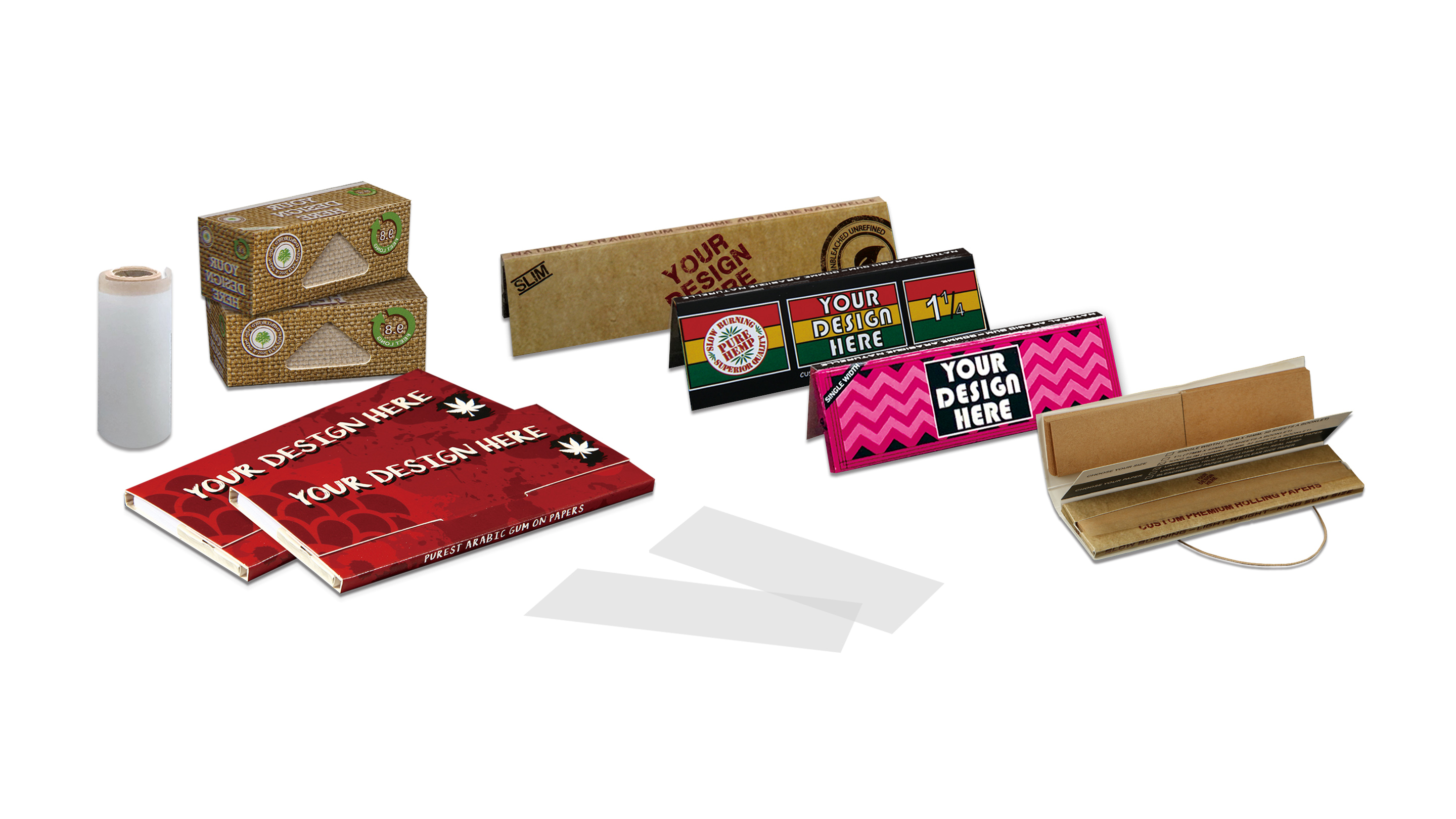
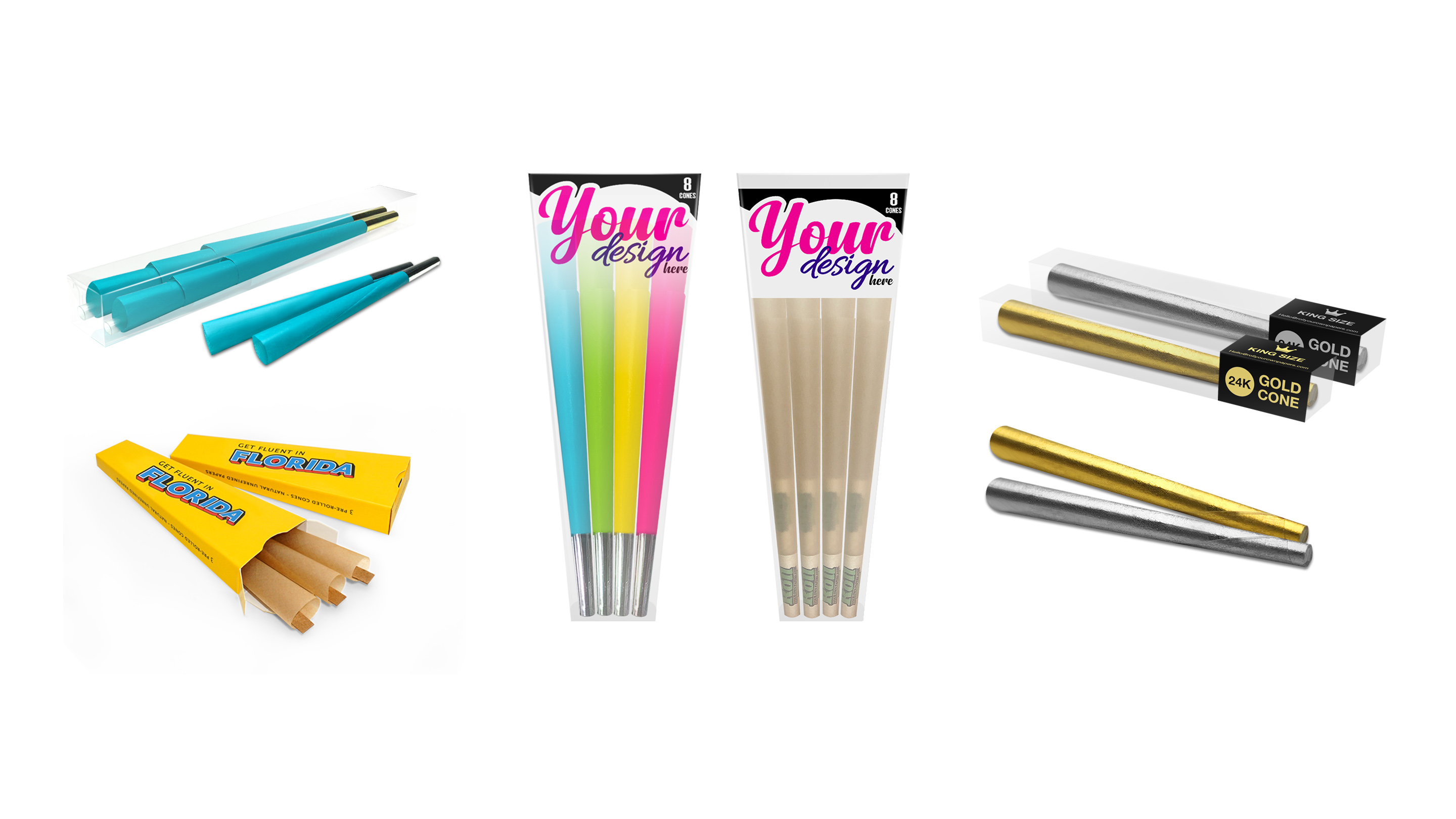
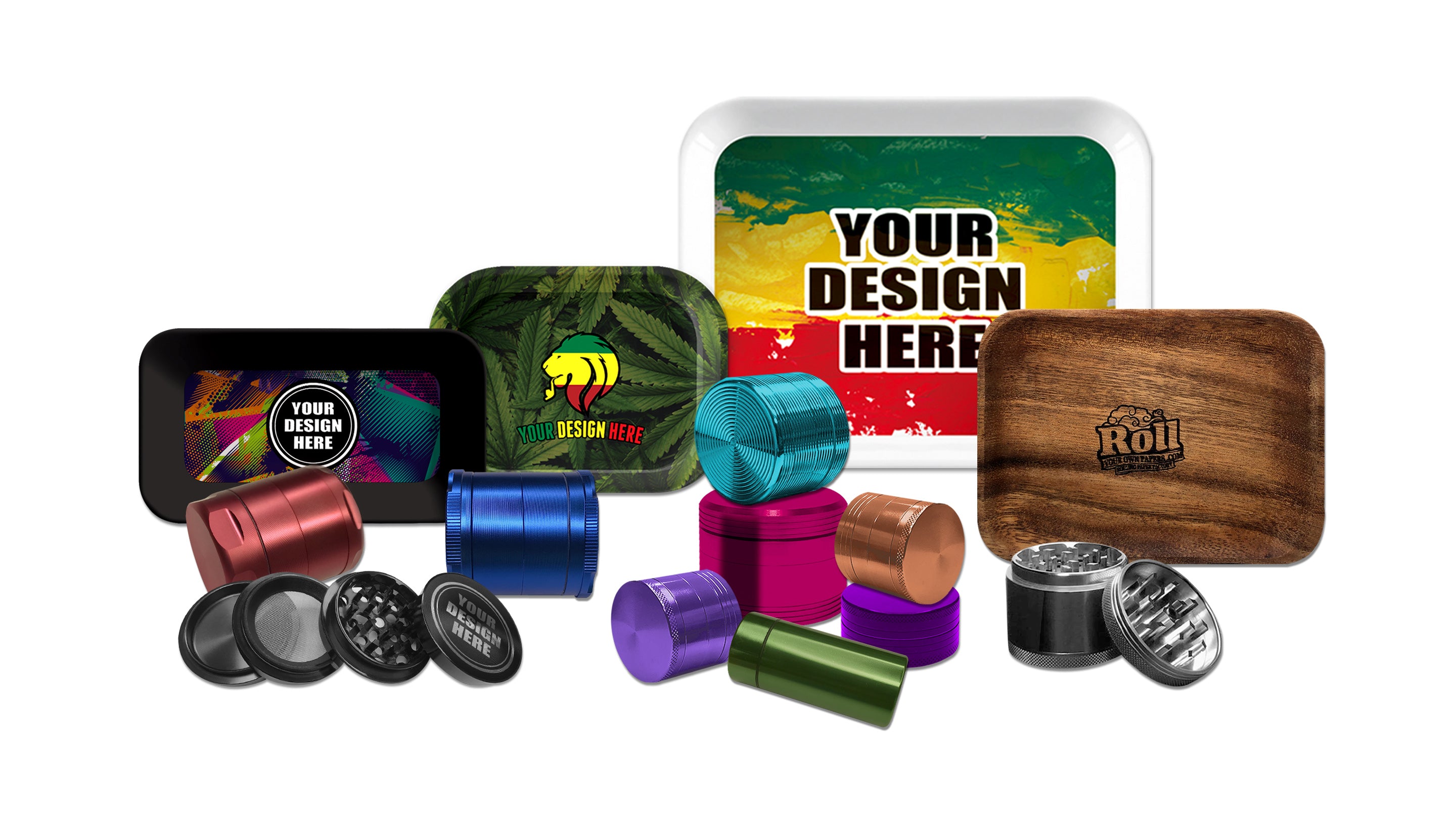
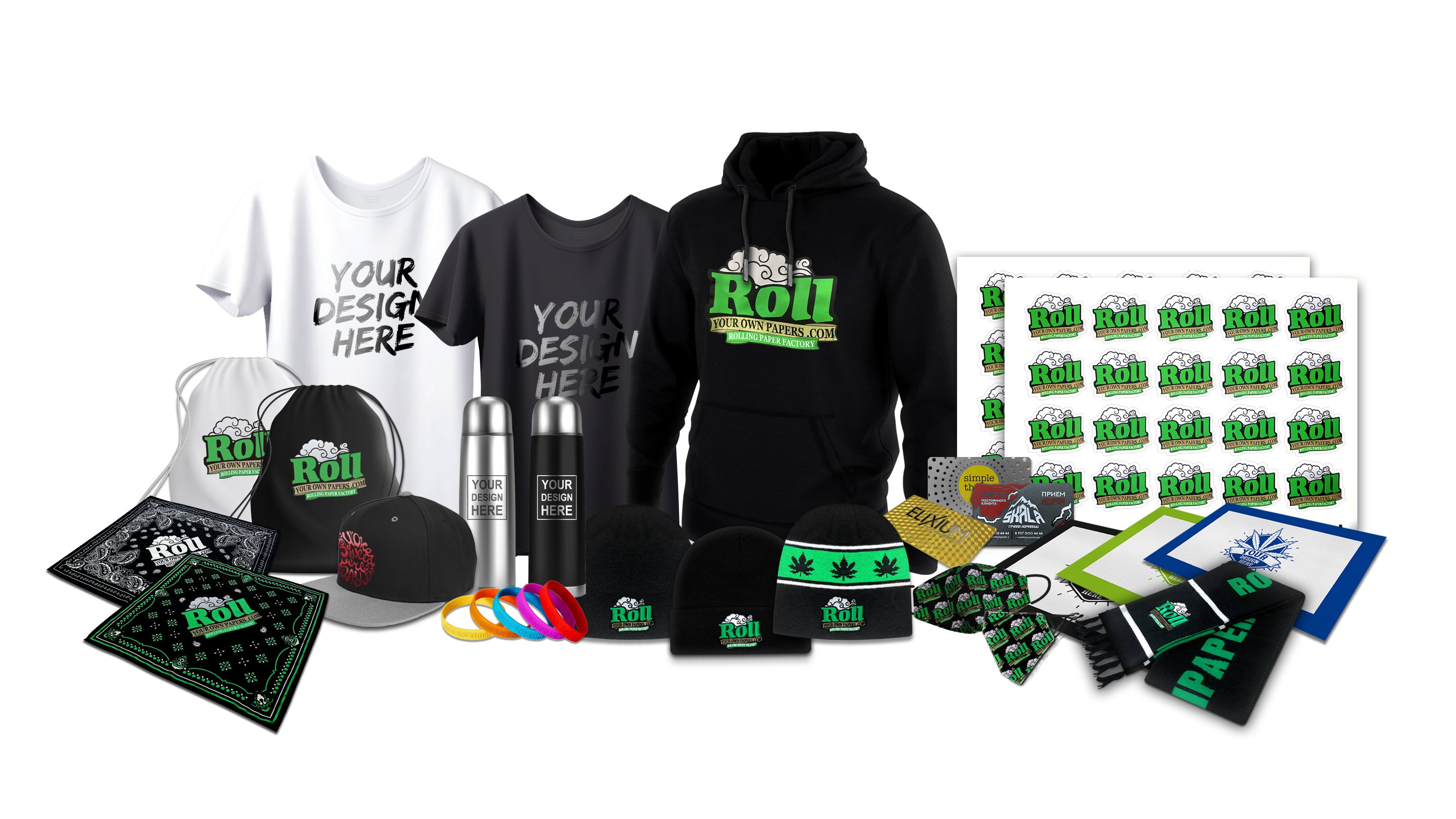
Forget generic packaging that blends into the background. Your brand deserves cannabis promotional products that turn heads, build loyalty, and make customers remember you long after the first toke. Whether you need custom rolling papers, branded lighters, unique marijuana accessories, or complete packaging solutions, we've got you covered. 🎯
- Made with premium, compliant materials
- Printed with food-grade, eco-friendly inks
- 100% customizable with your brand, artwork, or vibe
- Sealed with natural adhesives
- Industry-leading turnaround times
📦 Bulk orders available | 🚚 Fast shipping nationwide | 🌱 Always eco-conscious options
How to Choose a Cannabis Packaging Supplier (Without Getting Screwed) 🤝
Not all packaging suppliers are created equal, and choosing the wrong one can cost you way more than money—it can cost you time, compliance violations, and customer trust. Here's what to actually evaluate.
Reliability and Communication Matter More Than Price 📞
Seriously. A supplier who's 10% cheaper but misses deadlines, doesn't respond to emails, or ships incorrect orders will cost you way more in lost sales and stress. Look for:
- Dedicated account managers (not ticket systems)
- Proactive communication about delays or issues
- References from other cannabis businesses
- Track record of on-time delivery
Minimum Order Quantities (MOQs) Can Make or Break Startups 📊
Many suppliers require 10,000+ unit minimums. That's a huge investment for a new brand testing packaging designs. Find suppliers offering:
- Low MOQs (100-500 units for testing)
- Sample runs before full production
- Flexible scaling as your business grows
Smart strategy: Order small batches first, test customer response and compliance, then scale up with confidence. It costs a bit more per unit but dramatically reduces risk.
Turnaround Time Expectations (Real Numbers) ⏱️
- Stock items: 24-72 hours shipping
- Standard custom orders: 10-20 business days
- Complex custom designs: 6-10 weeks (includes proofing, revisions, production)
- Custom metal tins: 100-120 days (due to overseas manufacturing and supply chain complexity)
Always add buffer time for product launches. Nothing tanks a launch like waiting on packaging.
Quality Certifications to Verify 🏅
Don't take their word for it—ask for documentation:
- ASTM D3475 child-resistant certification
- 16 CFR 1700.20 CPSC compliance testing
- Food-grade lacquer treatment (for edibles packaging)
- State-specific compliance certifications
Suppliers should provide test reports and compliance documentation without you having to beg for it. If they're hesitant, that's a red flag.
What Custom Packaging Actually Costs (Real Numbers) 💰
Let's cut through the BS and talk real numbers. Packaging costs vary wildly based on materials, customization level, volume, and supplier. Here's what you can expect in 2025.
Mylar Bags 💵
- Low volume (500-1,000 units): $0.35-$0.75 per bag
- Medium volume (5,000-10,000 units): $0.20-$0.40 per bag
- High volume (25,000+ units): $0.12-$0.25 per bag
Add $0.05-$0.15 for premium finishes (matte, foil stamping, spot UV)
Glass Jars 💵💵
- Low volume (100-500 units): $1.50-$3.00 per jar with lid
- Medium volume (1,000-5,000 units): $0.80-$1.50 per jar
- High volume (10,000+ units): $0.50-$1.00 per jar
Amber or UV-protective glass adds $0.10-$0.25 per unit
Pre-Roll Tubes 💵
- Plastic tubes: $0.15-$0.45 per tube (volume-dependent)
- Glass tubes: $0.80-$2.00 per tube
Exit Bags 💵
- Generic child-resistant bags: $0.08-$0.15 per bag
- Custom-branded exit bags: $0.25-$0.50 per bag
Hidden Costs to Budget For 🔍
Don't forget about:
- Design fees: $500-$2,500 for professional packaging design
- Printing plates/setup: $150-$800 one-time charge per design
- Proofing and revisions: $50-$200 per round
- Rush fees: 25-50% upcharge for expedited production
- Shipping: Can be significant for glass and larger orders
- Storage costs: If you're ordering high volume, you need warehouse space
Real advice: Budget 20-30% more than quoted prices to cover unexpected costs and revisions. Packaging never goes exactly as planned on the first try.
Multi-State Packaging Strategies 🗺️
Operating in multiple states is the dream, but it's a compliance nightmare. Each state has different requirements, and maintaining separate packaging for each market gets expensive fast. Here's how smart operators handle it.
The "Most Restrictive" Strategy 📏
Design packaging that meets the most restrictive requirements across all your markets. This usually means:
- Child-resistant certification meeting the strictest standards
- Opaque packaging (even if some states allow clear)
- Maximum warning label space pre-allocated
- Universal cannabis symbol placement that works everywhere
Pros: Single packaging design, larger volume orders (lower per-unit cost), simplified inventory management
Cons: Higher per-unit cost than state-minimum packaging, might over-comply in some markets
The "Regional Variations" Strategy 🎨
Create regional packaging versions that comply with clusters of similar states. For example:
- West Coast version (CA, OR, WA, NV)
- Northeast version (MA, NY, NJ, CT)
- Midwest version (IL, MI, MO)
Pros: Optimized for regional compliance, potential for regional branding
Cons: More complex inventory, higher design costs, requires careful logistics
The "Core Plus Labels" Strategy 🏷️
Use standardized core packaging across all states, then add state-specific compliance labels. This works best for glass jars and rigid packaging with sufficient labeling space.
Pros: Maximum flexibility, can adapt to regulatory changes quickly
Cons: Extra labor for labeling, potential for labeling errors, less premium appearance
💡 Expert tip: Work with a packaging consultant who specializes in multi-state cannabis compliance. The money you spend on expert guidance will save you 10x in avoided violations and operational efficiency. This isn't the place to DIY and hope for the best.
Common Packaging Mistakes (And How to Avoid Them) ⚠️
Learn from others' expensive mistakes. Here are the most common packaging fails and how to avoid them.
Mistake #1: Skipping Physical Samples Before Large Orders 😬
Digital mockups look great on screen but can be completely different in person. Colors shift, finishes feel wrong, and materials don't always match expectations. Always order physical samples before committing to thousands of units.
Mistake #2: Ignoring the Unboxing Experience 📦
Your packaging doesn't end at the outer bag or jar. Customers notice insert quality, interior printing, how products fit inside, and the sounds/feels of opening. Magnetic closures that "click" satisfyingly, custom foam inserts, and unexpected touches create memorable experiences that drive loyalty and social sharing.
Mistake #3: Overdesigning for Your Target Market 🎨
A luxury packaging design won't work for value-conscious customers, and budget packaging will alienate premium buyers. Know your customer and design for them—not for what you think looks cool or what wins design awards.
Mistake #4: Forgetting About Shelf Impact 🛒
Your packaging will sit next to 50+ other products. View mockups in lineup context—not in isolation. Does your package stand out? Is key information readable from 3 feet away? Test this before production.
Mistake #5: Underestimating Storage and Logistics 🚚
Unusual packaging shapes might look awesome but can create expensive storage and shipping challenges. Stackability matters. Fragility matters. Warehouse space matters. Design packaging that's both beautiful and practical.
Mistake #6: Not Planning for Regulatory Changes 📋
Regulations change constantly. If possible, design with flexibility for label changes or symbol additions without requiring complete redesigns. Leave some space for "future compliance needs" even if you don't need it today.
Frequently Asked Questions 💬
Custom cannabis packaging refers to branded, compliant containers designed specifically for cannabis products like flower, edibles, concentrates, and pre-rolls. Unlike generic packaging, custom options feature your logo, brand colors, unique designs, and company messaging. Your dispensary needs custom packaging because it differentiates your products on crowded dispensary shelves (where up to 90% of purchase decisions happen), meets state-specific compliance requirements, protects product quality through proper sealing and UV protection, justifies premium pricing through perceived quality, and creates brand recognition that drives repeat purchases. In 2025's competitive cannabis market, generic packaging signals low-quality products and budget brands, while custom packaging communicates professionalism and commitment to quality.
For small cannabis businesses, custom packaging costs vary significantly based on materials and volume. Entry-level custom mylar bags typically cost $0.35-$0.75 per unit for orders of 500-1,000 units, while custom glass jars range from $1.50-$3.00 per unit at similar volumes. Pre-roll tubes run $0.15-$0.45 for plastic or $0.80-$2.00 for glass options. You'll also need to budget for one-time design fees (typically $500-$2,500 depending on complexity), printing plate setup costs ($150-$800 per design), and physical samples ($50-$200). For a new brand launching with 1,000 custom mylar bags, expect total investment around $1,200-$2,000 including design and setup. Costs decrease significantly as volume increases—at 10,000+ units, per-bag costs can drop to $0.12-$0.25. Many suppliers offer low minimum order quantities (MOQs) specifically for startups testing designs before committing to large production runs.
Child-resistant packaging requirements are mandated in virtually all legal cannabis states and must meet Consumer Product Safety Commission (CPSC) standards under 16 CFR 1700.20. Specifically, packaging must pass rigorous testing showing that 85% of children aged 42-51 months cannot open the package within five minutes, 80% still cannot open it after demonstration, and yet 90% of adults aged 50-70 can successfully open and properly close the package within five minutes. Acceptable mechanisms include push-and-turn caps, squeeze-and-turn closures, child-resistant zippers with secondary locking features, slide-lock containers, and pop-top designs. Cannabis businesses must obtain ASTM D3475 certification for their packaging and maintain documentation proving compliance. Testing typically costs $1,500-$3,000 per packaging design, though many suppliers offer pre-certified packaging options. Some states like California, Colorado, and Michigan strictly enforce these standards with unannounced compliance checks and significant penalties for violations including fines and product holds.
Multi-state cannabis operators typically cannot use identical packaging across all markets due to varying state regulations, but strategic approaches minimize costs. The most common solution is designing packaging that meets the most restrictive requirements across all target markets—for example, using opaque packaging even in states allowing transparency, or allocating maximum warning label space to accommodate states with extensive warning requirements. This "highest common denominator" approach allows single packaging designs with state-specific labels applied as needed. Alternatively, some operators use regional packaging variations clustered by similar regulatory requirements (West Coast version, Northeast version, etc.). California requires specific universal symbols and METRC integration, Colorado mandates red THC diamond symbols and Extended Producer Responsibility registration by July 2025, New York has unique Office of Cannabis Management labeling formats, and Michigan enforces strict METRC tracking. Working with compliance consultants who specialize in multi-state cannabis operations typically saves more money than the consultation costs by avoiding expensive redesigns and violations.
Mylar bags and glass jars serve different market positions and have distinct advantages. Mylar bags are lightweight polyester film packages (typically 4-5 mil thickness) that provide excellent barrier protection against moisture, oxygen, and light at affordable prices ($0.12-$0.75 per unit depending on volume). They work best for budget-conscious brands, high-volume operations, and products where portability matters like flower in 1g-56g sizes, edibles, and pre-roll multi-packs. Glass jars are non-reactive containers that preserve taste and smell perfectly, create premium brand perception, allow product visibility where regulations permit, and provide superior airtight sealing through threaded lids. They cost significantly more ($0.50-$3.00 per unit) but justify 20-30% higher retail pricing through perceived quality. Amber and black glass options offer UV protection to preserve cannabinoids and terpenes. Most successful brands use both strategically: glass for premium flower lines and high-end concentrates targeting luxury consumers, mylar for value products and bulk packaging targeting cost-conscious buyers.
Choosing a reliable cannabis packaging supplier requires evaluating several critical factors beyond just price. First, verify compliance certifications by requesting documentation for ASTM D3475 child-resistant testing, 16 CFR 1700.20 CPSC compliance, food-grade lacquer treatment for edibles packaging, and state-specific certifications. Second, assess communication quality—reliable suppliers provide dedicated account managers (not generic ticket systems), proactive updates about potential delays, and transparent timelines. Third, evaluate minimum order quantities (MOQs) to ensure they align with your business stage; startups should seek suppliers offering 100-500 unit minimums for testing before committing to large runs. Fourth, request and verify references from other cannabis businesses operating in similar markets. Fifth, always order physical samples before large production runs since digital mockups often differ significantly from physical products in color, texture, and finish. Finally, understand realistic turnaround times: stock items ship in 24-72 hours, standard custom orders take 10-20 business days, complex custom designs require 6-10 weeks, and specialty items like custom metal tins can take 100-120 days due to overseas manufacturing.
Cannabis packaging design has matured significantly in 2025, moving away from traditional "stoner aesthetics" toward sophisticated branding strategies proven to increase sales. Minimalist designs with generous white space, clean typography, and one or two accent colors dominate premium market segments and appeal to wellness-oriented consumers. Soft-touch matte finishes paired with metallic foil accents (gold, rose gold, silver) create tactile luxury experiences that justify 20-30% pricing premiums. Earth-tone color palettes featuring deep greens, warm terracotta, sage, and natural browns communicate organic plant-based origins and test well across demographics. Smart packaging integration through QR codes linking to strain information, dosage guides, cultivation stories, and full lab results transforms compliance requirements into brand experience opportunities. Sustainability features including hemp-based plastics, PCR (post-consumer recycled) materials, and ocean-reclaimed plastics resonate strongly with 72% of cannabis consumers who prefer eco-friendly options and willingly pay premiums. Transparent storytelling through interior printing, package inserts, or QR-linked content about cultivation practices and brand values drives emotional connection and repeat purchases. The most successful 2025 brands balance regulatory compliance, premium perception, and authentic storytelling through cohesive packaging design.
Final Thoughts: Your Packaging Is Your Silent Salesperson 🎯
Here's the bottom line: in 2025, cannabis packaging isn't just a container—it's your brand ambassador, compliance shield, and competitive advantage all rolled into one. Whether you're launching your first product or scaling to multiple states, the packaging decisions you make today will impact your sales, brand perception, and operational efficiency for years to come.
Don't cheap out on packaging thinking it's "just a bag." That "just a bag" is what customers see first, what regulators scrutinize, and what determines whether someone reaches for your product or your competitor's. Invest in custom cannabis packaging that reflects your brand's true quality and values.
And remember: compliance isn't optional, design matters more than you think, sustainability is becoming non-negotiable, and the right supplier relationship is worth more than saving a few cents per unit. Take your time, do it right, and your packaging will sell your products for you—even when you're not in the room. 🚀🌿
Ready to elevate your cannabis brand with packaging that actually converts? Check out our complete selection of smoking accessories wholesale and custom packaging solutions designed specifically for cannabis businesses that want to stand out, stay compliant, and scale profitably.


Leave a comment