

Custom Rolling Paper Sizes Guide (2026): 1 1/4, King Size & More

Custom Rolling Paper Sizes Guide 📏 (Brand‑Ready Size Chart + Booklet Tips)
Rolling paper sizing looks simple… until you compare three spec sheets and realize the names aren’t perfectly standardized. One catalog says “Single Wide,” another says “Regular,” and a third flips width and length. 😵💫 This guide fixes that.
You’ll get a clean breakdown of custom rolling paper sizes, plus a size‑naming map, a template‑first checklist, and a quick size picker quiz. Dimensions use your five offered sizes and are cross‑checked against published specs and template libraries (sources accessed March 2026).
Executive Summary ⚡
- Best “first run” pick: 1 1/4 rolling papers (77×44 mm) — the most versatile and easiest to design for.
- Modern long format: King Slim (109×44 mm) — often published as 44×109 mm by major brands.
- Long + narrow: Ultra Super King (108×36 mm) — commonly described as super‑slim long by manufacturers.
- Long + wide: Super King (109×54 mm) — often called “King Wide” in some size guides.
- Compact classic: Single Width (70×36 mm) — pocket‑friendly booklet footprint.
- Rule that prevents mistakes: choose by mm, then design inside the exact booklet dieline (template‑first).
Table of Contents 🧭
- Most Popular Rolling Paper Sizes 📏
- Single Wide / Single Width 🧩
- 1 1/4 Size ⭐
- King Size Slim 👑
- Which Size Is Best for Brands? 🚀
- Custom Rolling Paper Booklet Sizes 📦
- How to Choose the Right Size 🤝
- FAQ ❓
Most Popular Rolling Paper Sizes 📏
When people search rolling paper sizes, they usually want two things: (1) a comparison chart, and (2) help choosing the right format. We’ll do both.
Note on orientation: many brands publish sizes as W×L (for example, 44×109), but your store uses L×W. This guide lists everything as Length × Width to match your specs.
Source basis: OCB publishes widely referenced specs and leaf counts for Single (36×69), 1 1/4 (44×77), and Slim (44×109). Field Trip’s size guide lists Super King (109×54). For final artwork, always use the supplier dieline/template (templates + instructions are commonly provided in template libraries). (All sources accessed March 2026.)

Quick Comparison Chart 📐
Inch conversions are rounded to two decimals. If your supplier’s template differs by 1–2 mm, follow the template (not the chart).
| Size (ROLLYOUROWNPAPERS.COM) | Sheet size (L×W) | Approx. inches (L×W) | Quick vibe |
|---|---|---|---|
| Single Width | 70×36 mm | 2.76×1.42 in | Compact + classic |
| 1 1/4 | 77×44 mm | 3.03×1.73 in | All‑around favorite |
| Ultra Super King | 108×36 mm | 4.25×1.42 in | Long + narrow |
| King Slim | 109×44 mm | 4.29×1.73 in | Long + slim (premium feel) |
| Super King | 109×54 mm | 4.29×2.13 in | Long + wide |
Size‑Naming Map 🗺️ (Names People Actually Use)
This is the #1 thing most competitors don’t include: a map between names and numbers. It helps buyers and designers avoid ordering the wrong format.
| Size name | Common alternate names | Often written as (W×L) |
|---|---|---|
| Single Width (70×36) | Single Wide, Regular, Single | 36×69 or 36×70 (approx.) |
| 1 1/4 (77×44) | 1.25, One‑and‑a‑Quarter | 44×77 |
| Ultra Super King (108×36) | Super Slim Long, Extra Slim Long | 36×108 |
| King Slim (109×44) | King Size Slim, KSS | 44×109 |
| Super King (109×54) | King Wide, King Size Wide, Super King | 54×109 |
Pro tip: When requesting quotes, write it like this: “King Slim (109×44 mm)”. Names vary, numbers don’t. ✅
Single Wide / Single Width 🧩
Your spec: Single Width 70×36 mm. This sits in the mainstream “Single / Single Wide” family that major brands often publish around 36×69 mm (same numbers, flipped orientation in W×L). (OCB published size specs, accessed March 2026.)
Best for ✅
- Pocket-friendly packs and minimal counter space
- Classic “no-fuss” format
- Simple booklet designs (logo-forward)
Design notes 🎨
Keep the cover clean. A large logo + one supporting line usually looks better than cramming in details. If you need small text (ingredients, warnings, QR), put it on the back panel.
Leaf-count guidance 📄
Many single formats are published with 50 leaves in well-known product ranges. That typically means a slightly thicker booklet than 32-leaf long formats, so spine width matters. (OCB published size specs, accessed March 2026.)
1 1/4 Size ⭐
Your spec: 77×44 mm. Major brands publish this family as 44×77 mm (W×L) and frequently list 50 leaves per booklet for common 1 1/4 booklets. (OCB published size specs; OCB USA product specs, accessed March 2026.)
Why 1 1/4 is the universal starter 🏆
If you can only carry one format at launch, this is it. 1 1/4 rolling papers are easy to use, easy to display, and easy to design for. They also convert well because shoppers instantly recognize the size name.
Best for ✅
- First custom order / first branded drop
- Merch bundles and giveaways (without needing specialized packaging)
- Artwork with a bit more detail (illustrations, extra text)
Booklet expectation 📦
Because 1 1/4 programs often run at 50 leaves, confirm the booklet thickness early if you’re adding inserts or a closure style. More thickness = more spine real estate, but also more ways to misalign art if you ignore the template.
King Size Slim 👑
Your spec: King Slim 109×44 mm. This matches the common “slim” long format that major brands often publish as 44×109 mm, frequently with 32 leaves per booklet for slim booklets. (OCB published size specs; OCB USA product specs, accessed March 2026.)
What “king size rolling papers” usually means 💬
Most searches for king size rolling papers are really about length (around 108–110 mm) plus a choice of width: slim, extra-slim, or wide. Your range covers all three.
Ultra Super King 108×36 mm 🧊
This is your long‑and‑narrow option. Manufacturers publish 108×36 mm as a super‑slim long format in product specs (for example, Moon’s published spec for a super‑slim long sheet lists 108×36 mm; accessed March 2026).
Best for ✅
- Customers who want length with a narrower width
- Minimalist brand positioning (“clean, light, simple”)
- Distinct differentiation from standard slim formats
Super King 109×54 mm 🌟
Your wide long format. At least one popular size guide lists Super King 109×54 mm and notes 32 sheets per booklet. (Field Trip size guide, accessed March 2026.)
Best for ✅
- People who prefer extra width
- Wider cover designs that benefit from more front-panel space
- Brands that want a “bigger” long-format option
Quick long-format recap 🔁
- Ultra Super King (108×36): long + narrow
- King Slim (109×44): long + slim
- Super King (109×54): long + wide
Which Size Is Best for Brands? 🚀
Choosing from custom rolling paper sizes gets easy when you pick your “hero size” first, then add a second size only if it changes the experience. Here are practical, conversion-friendly recommendations.
Fast picks (what most brands do) 😎
- Hero size for broad appeal: 1 1/4 (77×44)
- Premium long hero: King Slim (109×44)
- Niche add-on: Ultra Super King (108×36) for extra-slim-long
- Wide add-on: Super King (109×54) if customers ask for width
- Compact add-on: Single Width (70×36) for portability
Size Picker Mini‑Quiz 🎯
Pick the answer that feels most like your customer. Count which size shows up most, and that’s your hero.
1) What’s the goal of the pack?
- A) Pocket-friendly → Single Width
- B) All-around familiar → 1 1/4
- C) Premium long format → King Slim
2) Width preference?
- A) Narrow → Ultra Super King
- B) Standard slim → King Slim
- C) Wide → Super King
3) Design style?
- A) Minimal logo-forward → Single Width or King Slim
- B) Detailed art + more text → 1 1/4 or Super King
4) If you stock only one size this month?
- A) 1 1/4 (77×44)
- B) King Slim (109×44)
- C) Single Width (70×36)
Result: whichever you picked most is your hero. Add one “contrast” size later (narrow-long or wide-long). ✅
Quick promo ✨
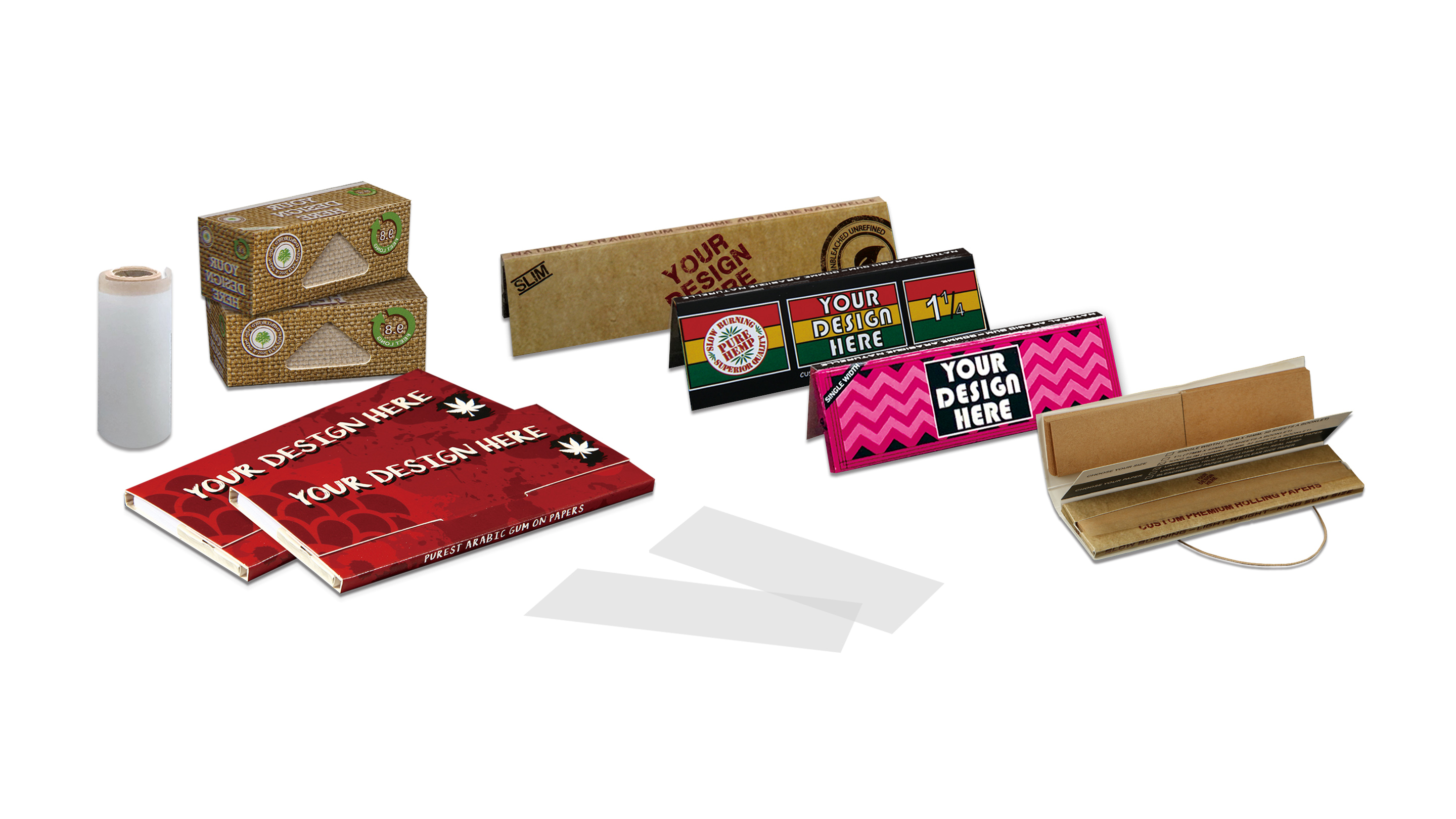
If you want your packaging to look consistent from batch to batch, the material and cut accuracy matter as much as the artwork. Our Rolling Paper is produced for clean edges and predictable booklet builds, so your designs stay aligned and your finished packs look sharp. When you’re ready, explore our custom rolling papers to start.
Custom Rolling Paper Booklet Sizes 📦
Sheet size is only half the story. The booklet is the billboard (front, back, spine), and booklet construction determines how your art wraps around folds. This is where many “sizes guides” fall short.
Leaf-count guidance 📄
Published specs show common patterns you can use as expectations (then confirm with your supplier dieline):
- Single + 1 1/4: often published at 44-50 leaves in major product ranges. (OCB published size specs; OCB USA product specs, accessed March 2026.)
- King Slim (slim long): commonly published at 32 leaves in major product ranges. (OCB published size specs; OCB USA product specs, accessed March 2026.)
- Super King: listed as 32 sheets per booklet in a popular size guide. (Field Trip size guide, accessed March 2026.)
Why leaf count matters (spines + folds)
More leaves usually means a thicker pack and wider spine. That changes the fold geometry and the safe zones on your cover. So if your design lives on the spine (or wraps around edges), you’ll feel leaf count differences immediately.
Booklet build options that change “fit” 🧲
- Inserts: added inserts increase thickness and can change spine width.
- Closure styles: closures add layers and change how the cover sits flat.
- Retail cartons: long formats often have different carton specs—plan carton sizing early if you’re doing counter packs.
Printable Cheat Sheet Idea 🖨️
Create a one‑page printable “Size Cheat Sheet” (PDF + a mobile image) that includes:
- The 5-size chart (mm + inches)
- The Size‑Naming Map
- A mini “Pick this size if…” section (3 bullets per size)
- A 3-step Template‑First checklist
Asset request: generate (1) a branded comparison chart image (for the blog) and (2) a printable cheat sheet image (for download / email).
How to Choose the Right Size 🤝
This workflow is how you avoid the classic mistakes: wrong size, wrong spine, or artwork drifting across folds. It’s also how you look “pro” to buyers.
Template‑First Checklist ✅
- Choose by mm: start with numbers (e.g., 109×44), then confirm the name.
- Get the exact booklet dieline: many suppliers publish PDF templates and instruction docs in template libraries. (Supplier template libraries, accessed March 2026.)
- Confirm the build: leaf count (32 vs 50), inserts, closure style, cartons.
- Design inside the dieline: keep key text/logos inside safe zones; bleed goes to bleed lines.
- Proof at 100% scale: print a mockup and check spine alignment before approval.
Common pitfalls 🧠
Pitfall: W×L vs L×W confusion
You’ll see the same sheet listed as 44×109 and 109×44. Always confirm which number is length vs width, and keep a saved “master chart” in your brand docs.
Pitfall: treating every “king” as identical
“King” can mean slim, wide, or extra‑slim long depending on the catalog. Use the mm spec: 108×36 vs 109×44 vs 109×54.
Pitfall: forgetting leaf count when designing the spine
Leaf count changes thickness, thickness changes spine width, spine width changes layout. If you ignore this, the spine is where misalignment shows up first.
FAQ ❓
What are the most common custom rolling paper sizes?
The most commonly purchased formats are Single Width (70×36 mm), 1 1/4 (77×44 mm), and King Slim (109×44 mm). Ultra Super King (108×36 mm) and Super King (109×54 mm) add narrow-long and wide-long options.
Is Single Width the same as Single Wide or Regular?
Often yes. Some brands list this family as “Single” or “Single Wide” and publish 36×69 mm (W×L). Your store lists 70×36 mm (L×W), which is the same family with orientation differences—confirm the mm spec in the supplier template to be safe.
What size are 1 1/4 rolling papers?
In this guide, 1 1/4 rolling papers are 77×44 mm (L×W). Many published specs show the same sheet as 44×77 mm (W×L).
What do people mean by “king size rolling papers”?
Usually they mean the long formats around 108–110 mm length. That can include Ultra Super King (108×36), King Slim (109×44), or Super King (109×54)—width is the main difference.
How many leaves should a booklet have?
Common builds include 32 leaves and 50 leaves depending on size and program. Leaf count affects thickness and spine width, so confirm it before final artwork.
What’s the easiest size for a first custom order?
1 1/4 (77×44 mm) is the easiest first choice for most brands because it balances familiarity with design space. If you want a more premium long pack, King Slim (109×44 mm) is a strong second option.
What’s the fastest way to avoid artwork misalignment?
Use a template-first workflow: request the exact booklet dieline for your leaf count and add-ons, design inside safe zones, and proof at 100% scale before approval.





Leave a comment