
Promotional Products That Win at Herbal Industry Events in 2026

The best promotional products for herbal industry events? They're functional, branded accessories that attendees actually use. Think custom rolling papers, branded grinders, personalized lighters, and premium rolling trays. Unlike forgettable pens or foam stress balls, these items stay in rotation for weeks — sometimes months — keeping your logo front and center long after the event wraps up.
Here's what most people get wrong when planning event giveaways: it's not about the cost per unit. It's about the cost per impression. A branded rolling accessory that someone reaches for three times a week for six months? That's thousands of brand exposures. That math changes everything.
And in 2026, with more expos, trade shows, and herbal industry gatherings on the calendar than ever, standing out from the crowd takes more than a logo slapped on something generic.
Whether you're a brand manager scouting options for your next booth or an event planner building swag bags for 5,000 attendees, this breakdown covers exactly which promotional products deliver the highest ROI — and how to order them without blowing your budget or missing your deadline.
Table of Contents
- Why Generic Swag Falls Flat at Industry Events
- Custom Rolling Papers: The MVP of Event Merch
- Pre-Rolled Cones That Attendees Actually Keep
- Branded Grinders: The Gift That Keeps Giving
- Lighters, Matchbooks & Filter Tips — Small Items, Big Impressions
- Premium Rolling Trays as VIP-Level Giveaways
- Side-by-Side Comparison: Which Product Fits Your Event Budget?
- How to Build a Multi-Tier Swag Strategy
- B2B Ordering: MOQs, Lead Times & What to Expect
- Design Tips That Maximize Brand Recall
- Frequently Asked Questions
Why Generic Swag Falls Flat at Industry Events
Let's be honest — nobody flies across the country to a herbal industry expo and gets excited about a lanyard.
The promotional products industry is worth over $26 billion globally in 2026. And yet, the vast majority of event giveaways end up in the trash within a week. A study from the Advertising Specialty Institute found that useful promotional items are kept an average of 8 months, while generic swag barely survives the drive home. That's the gap between relevance and waste.
At herbal industry events — botanical expos, brand launch parties, trade shows, festival activations — your audience has very specific interests. They care about rolling accessories. They care about quality materials. They care about aesthetics. So why hand them a cheap keychain?
The smartest brands in this space have figured something out: when your promotional product is the product your customer already uses, it doesn't feel like advertising. It feels like a gift. And that emotional shift? It's what turns a one-time booth visitor into a loyal customer.
The Three Rules of Event Swag That Works
Before we get into specific products, here are three principles that separate forgettable giveaways from brand-building machines:
Rule 1: Utility over novelty. If someone can use it during the event itself, you've already won. Rolling accessories clear this bar effortlessly.
Rule 2: Quality signals brand quality. A flimsy, poorly printed item tells attendees everything about your standards. Fair warning — this is the fastest way to damage brand perception at scale.
Rule 3: Design for shareability. In 2026, roughly 73% of expo attendees share event swag on social media if the design is visually compelling. That's free organic reach you simply can't buy with paid ads.
Custom Rolling Papers: The MVP of Event Merch
If you're going to invest in one single promotional product for a herbal industry event, custom rolling papers should be at the top of your list. Here's why.
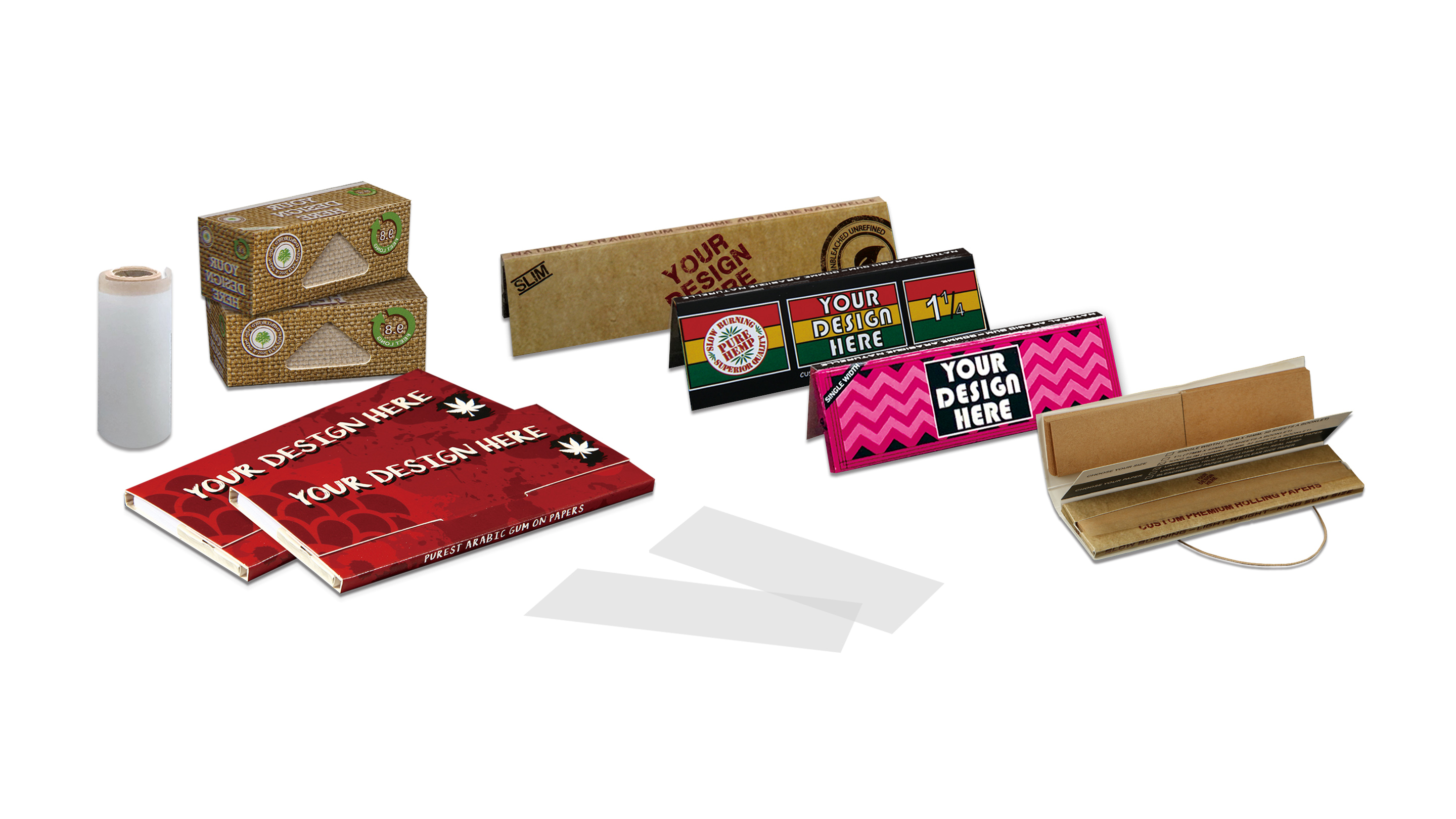
Custom rolling papers — papers printed with your logo, design, or event branding on the booklet, wrap, or even the paper itself — combine low per-unit cost with extremely high perceived value. A single booklet weighs almost nothing (ideal for swag bags), costs a fraction of what you'd spend on a branded t-shirt, and gets used repeatedly in the exact context where your brand wants to show up.
And honestly? They're one of the very few promotional products where people will actually ask you for more.
What Makes Them Work at Events Specifically
Think about the typical flow at an expo or brand activation. Attendees walk booth to booth, collecting items, making snap judgments. A branded paper booklet fits in a pocket. It doesn't need a bag. It sparks conversation: "Where'd you get those?" That kind of word-of-mouth effect is impossible to manufacture with a stress ball.
On top of that, the print real estate on a rolling paper booklet is surprisingly generous. You've got the front cover, back cover, inside flap, and — depending on the supplier — the tips sheet and even individual paper watermarks. That's five or six surfaces for your brand message, all within one compact item.
Event-Specific Customization Ideas
Here are some approaches brands are using in 2026 that go well beyond slapping a logo on the front:
- QR codes on the inside flap — linking to exclusive post-event offers or loyalty programs
- Event-specific limited editions — numbered booklets that create collectibility
- Collaborative designs — co-branded papers with another exhibitor for cross-promotion
- Social handles and hashtags — printed directly on the booklet wrap
Worth noting: limited-edition papers have become their own micro-economy in the herbal accessories world. Collectors trade them online, which means your brand gets exposure to audiences who weren't even at the event. Pretty wild, right?
Pre-Rolled Cones That Attendees Actually Keep
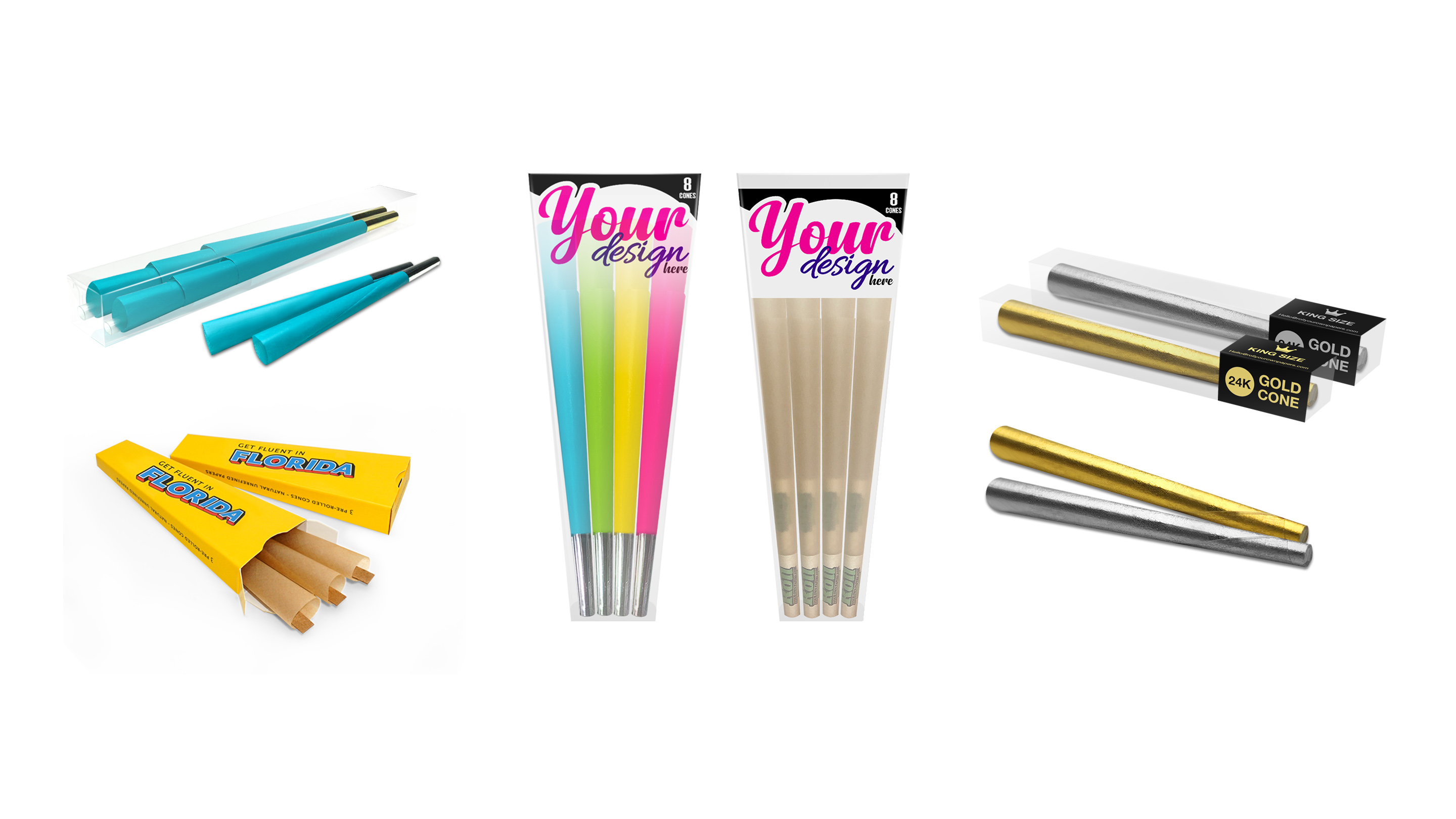
Custom pre-rolled cones sit in a sweet spot between everyday utility and premium perception. They feel more "finished" than flat papers, which gives them a slight edge as a higher-end giveaway — even though the unit cost difference is minimal at bulk quantities.
For events specifically, pre-rolled cones solve a packaging problem that flat papers don't: they come in tubes or multi-packs that double as natural display pieces. A clear tube with your brand on it? That sits on someone's shelf. That's ambient advertising every single day.
Sizes and Formats That Work Best for Events
The short answer? King-size cones in branded tubes are the event gold standard. They're substantial enough to feel valuable, and the tube protects them during the chaos of a busy expo floor. But if you're handing out thousands and need to keep costs tight, single cones in branded sleeves work beautifully too.
Some brands are packaging three cones together — one in each of their brand colors or variety lines — to create a sampler-style giveaway. This approach bumps up perceived value dramatically. And about 68% of recipients report keeping multi-packs longer than single items.
Branded Grinders: The Gift That Keeps Giving
If rolling papers are the high-volume play, herb grinders are the high-impact play. A quality branded grinder can stay in someone's daily rotation for years. Years. That's a level of brand longevity that almost no other promotional product can touch.
The tradeoff? Higher per-unit cost. But here's the thing — grinders don't need to go to every attendee. They're perfect for targeted distribution: VIP attendees, influencer gifting suites, contest prizes, or first-100-through-the-door exclusives.
Material and Print Options
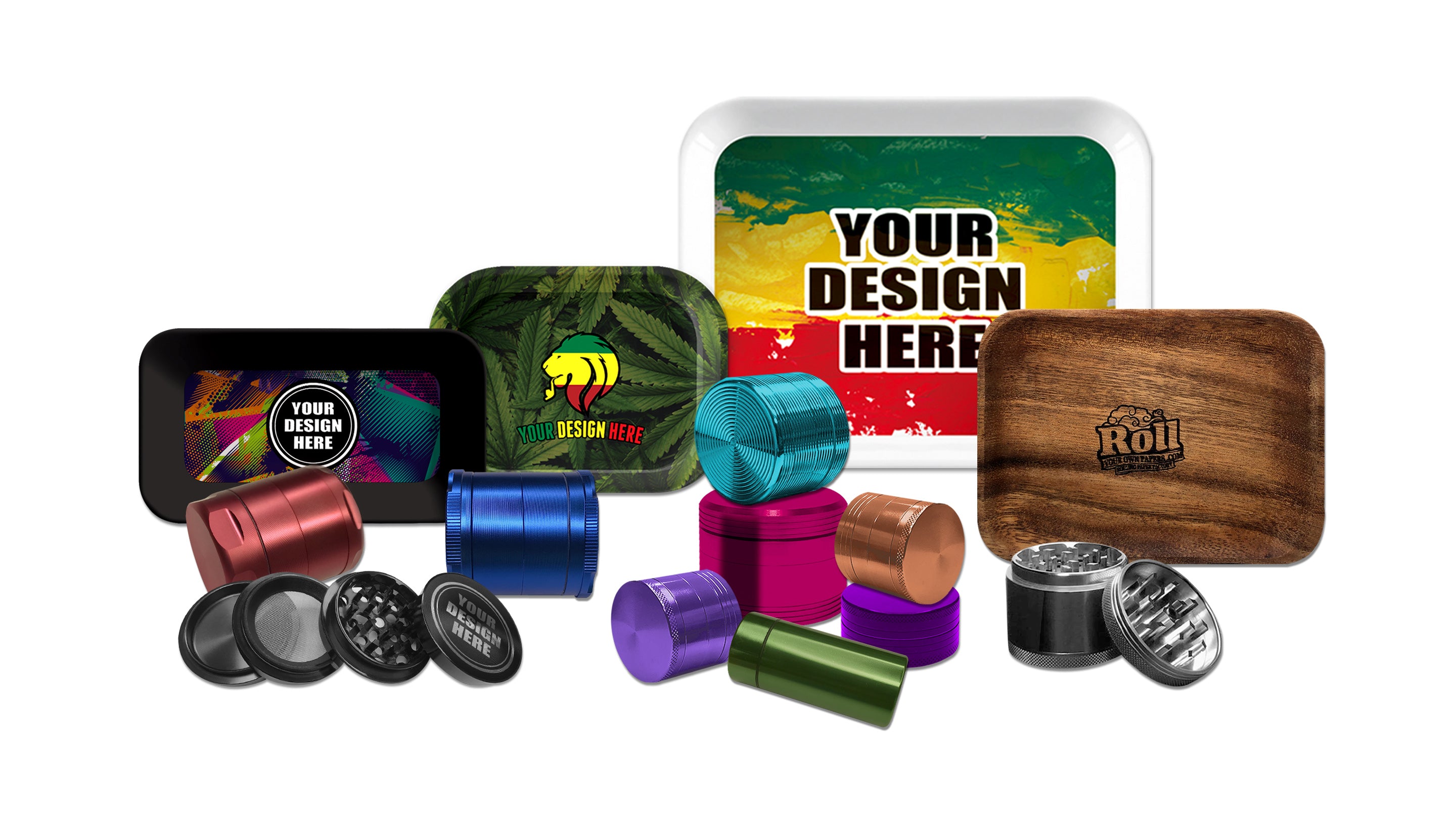
Most event grinders are two-piece or four-piece aluminum models with laser-engraved or UV-printed branding on the lid. Laser engraving tends to last longer and feels more premium, while UV printing allows for full-color artwork. Both hold up well over time.
A common mistake? Ordering grinders that are too small. The 55mm or 63mm diameter models feel substantial in-hand and actually work efficiently. Anything smaller than 50mm feels like a novelty toy — and that undercuts the premium perception you're paying for.
What Brand Managers Need to Know
If you're a brand manager reading this, here's the real calculus: a custom grinder at $4–$8 per unit (depending on quantity and customization) delivers an estimated 500+ brand impressions over its lifetime. Compare that to a digital ad impression at $5–$15 CPM. The ROI math gets very compelling very fast.
Lighters, Matchbooks & Filter Tips — Small Items, Big Impressions
Not every promotional product needs to be the star of the show. Sometimes the supporting cast does the real work. That's where custom lighters, custom matchbooks, and custom filter tips come in.
These three categories share a common trait: they're small, light, inexpensive in bulk, and universally useful. And they fill out a swag bag in ways that make the whole package feel curated rather than thrown together.
Custom Lighters
Branded lighters are perhaps the single most iconic promotional product in the herbal accessories space. There's a reason for that — they just work. Everyone needs one, everyone loses them, and everyone's happy to grab a free replacement. A wrapped or printed lighter with a bold design gets shared, borrowed, and photographed constantly.
Pro tip for events: order at least 20% more lighters than your expected attendee count. They move fast. People take two. People take three for friends who "couldn't make it." Plan accordingly.
Custom Matchbooks
Matchbooks are having a serious resurgence. They carry a vintage, artisanal vibe that resonates with the boutique and craft-oriented end of the herbal market. And they're phenomenally cost-effective — we're talking pennies per unit at scale.
Design-wise, matchbooks offer front, back, and interior striker-panel print surfaces. Brands that treat matchbooks like miniature billboards — with clever copy, striking visuals, and a clear call to action — get disproportionate value from these tiny items.
Custom Filter Tips
Here's what most people miss about filter tips as promotional items: they get used with other products. That means your brand shows up during the actual ritual of preparation — an incredibly intimate touchpoint. A booklet of branded tips tucked inside a swag bag is subtle, useful, and genuinely appreciated.
And at roughly $0.50–$1.50 per booklet in bulk? They're one of the most budget-friendly ways to increase your brand presence at any event.
Premium Rolling Trays as VIP-Level Giveaways
Now let's talk about the heavy hitter. Premium rolling trays aren't your standard swag bag item — and that's exactly the point.
A custom rolling tray is a statement piece. It lives on a coffee table, a desk, or a nightstand. It's visible to everyone who walks into that person's space. And because the print surface is large and flat, the design potential is nearly unlimited — full-color photography, intricate illustrations, metallic finishes... all possible.
When to Use Trays as Promotional Products
Rolling trays make the most sense as:
- VIP and media gifts — bundled with other items in a branded box
- Raffle or contest prizes — driving booth traffic and social engagement
- Top-tier loyalty rewards — for existing customers meeting you at the event
- Limited-edition drops — artist collaborations that build hype
Event planners — this one's for you. If you're curating a VIP gift box for speakers, sponsors, or influencers, a branded rolling tray anchors the entire package. It's the item that makes everything else feel intentional.
At an average cost of $8–$18 per unit depending on material and size, trays are obviously pricier than papers or tips. But the impression-per-dollar ratio is excellent because they simply don't get thrown away. Industry data suggests over 82% of recipients keep branded trays for at least one year.
Side-by-Side Comparison: Which Product Fits Your Event Budget?
Choosing the right mix depends on your goals, audience size, and budget. Here's a practical breakdown to help you decide:
| Product | Cost Per Unit (Bulk) | Perceived Value | Best For | Estimated Impressions Per Item | Portability |
|---|---|---|---|---|---|
| Custom Rolling Papers | $0.30 – $1.50 | Medium | Mass distribution, swag bags | 50 – 150 | ★★★★★ |
| Pre-Rolled Cones | $0.60 – $2.50 | Medium-High | Swag bags, booth giveaways | 30 – 80 | ★★★★☆ |
| Herb Grinders | $4.00 – $8.00 | High | VIP gifts, contest prizes | 500+ | ★★★☆☆ |
| Custom Lighters | $1.00 – $3.00 | Medium | Universal giveaways | 100 – 300 | ★★★★★ |
| Custom Matchbooks | $0.15 – $0.60 | Low-Medium | High-volume, budget events | 20 – 50 | ★★★★★ |
| Custom Filter Tips | $0.50 – $1.50 | Medium | Swag bag filler, pairing item | 40 – 100 | ★★★★★ |
| Rolling Trays | $8.00 – $18.00 | Very High | VIP gifts, influencer kits | 1,000+ | ★★☆☆☆ |
The takeaway? There's no single "best" product. The best event strategies layer multiple items across different tiers. More on that next.
How to Build a Multi-Tier Swag Strategy
The most successful exhibitors at herbal industry events don't rely on a single giveaway. They build a tiered system that matches the promotional product to the interaction level. Sound familiar? It's the same logic behind tiered loyalty programs — and it works for the exact same reasons.
Tier 1: The Walk-By (Everyone)
These are the items you hand out freely to anyone who passes your booth. They should be lightweight, cheap, and branded. Custom matchbooks, individual filter tip booklets, or single custom rolling papers booklets are ideal here. Budget: $0.15 – $1.50 per person.
Tier 2: The Engaged Visitor (Leads)
Someone stops. Asks questions. Scans your QR code. Gives you their email. They've earned something better. A branded lighter paired with a cone pack — or a rolling paper booklet bundled with filter tips — creates a mini-kit that feels premium without breaking the bank. Budget: $2.00 – $5.00 per person.
Tier 3: The VIP (Partners, Press, Influencers)
For the people who can actually move the needle for your brand, go big. A curated gift box containing a branded grinder, rolling tray, paper booklet, cone tubes, and a lighter tells the story of a brand that takes quality seriously. Budget: $25 – $60 per kit, depending on customization level.
Real-World Example: A 3,000-Person Expo
Let's say you're exhibiting at a trade show with 3,000 expected attendees. Here's what a smart allocation might look like:
- Tier 1: 2,500 matchbooks + 2,500 filter tip booklets = ~$1,500
- Tier 2: 500 lighter-and-paper bundles = ~$1,750
- Tier 3: 30 VIP gift boxes = ~$1,200
- Total budget: approximately $4,450
That's under $1.50 per attendee for comprehensive brand coverage across every tier. And those Tier 3 boxes alone? They could generate dozens of social media posts worth far more than the investment.
B2B Ordering: MOQs, Lead Times & What to Expect
This is the section that saves you from last-minute panic. If you're ordering promotional products for an upcoming event, timing is everything — and the details matter more than you'd think.
What's the Minimum Order Quantity?
MOQs vary by product:
- Custom rolling papers: Typically 1,000 – 2,500 booklets minimum
- Pre-rolled cones: Often 1,000 – 5,000 units minimum
- Grinders: 100 – 250 units minimum for custom engraving
- Lighters: 100 – 500 units depending on wrap vs. print
- Matchbooks: 1,000+ (they're so inexpensive that small orders don't make economic sense)
- Filter tips: 1,000 – 2,500 booklets minimum
- Rolling trays: 50 – 100 units minimum for custom printing
How Long Does Production Take?
Standard lead times for custom-printed rolling accessories typically range from 2 to 4 weeks after artwork approval. That said — rush orders are often possible for an additional fee, especially for simpler items like lighters and matchbooks.
Here's a timeline that works for most events:
- 8 weeks before: Finalize product selection and quantities
- 6 weeks before: Submit artwork and approve proofs
- 4 weeks before: Production begins
- 2 weeks before: Shipping and delivery
- 1 week before: Unbox, quality check, assemble kits if applicable
Fair warning — waiting until 3 weeks out puts you in rush territory and limits your options. Over 45% of event buyers report that starting too late was their biggest procurement regret. Don't be that buyer.
Bulk Pricing: What Discounts Can You Expect?
Most custom accessory suppliers — RYOP included — offer tiered pricing that drops significantly at higher quantities. As a rough guide:
- 1,000 units: Standard pricing
- 2,500 units: 10 – 15% reduction
- 5,000 units: 15 – 25% reduction
- 10,000+ units: 25 – 40% reduction (often with perks like free proofs or priority production)
The sweet spot for most event buyers is the 2,500 – 5,000 range. You get meaningful cost savings without committing to warehouse-filling quantities.
Design Tips That Maximize Brand Recall
You've chosen your products. You've placed the order. Now the design needs to pull its weight. No fluff here — just the principles that separate forgettable merch from items people photograph and share.
1. Contrast Is King
Your logo needs to be legible from arm's length. On a lighter, that's about 18 inches. On a rolling paper booklet, roughly 12. If your brand uses light colors, put them on a dark background — and vice versa. Sounds obvious? You'd be shocked how many brands submit low-contrast artwork that disappears on the final product.
2. Less Text, More Identity
Event giveaways aren't brochures. You don't need your mission statement on a grinder lid. Logo, one tagline (max five words), and a URL or social handle. That's it. People should recognize your brand in under two seconds.
3. Use the Inside Surfaces
Most brands focus exclusively on the front cover or outer surface. But the inside flap of a custom rolling papers booklet, the underside of a rolling tray, or the interior of a cone tube — these are hidden-gem surfaces. Use them for discount codes, event-specific messages, or witty copy that rewards the person who actually opens your product.
4. Think About Photography
Will this item look good in a flat-lay Instagram post? Will the colors pop against common backgrounds? Designing with social sharing in mind increases your organic reach exponentially. Some brands even include a small "📸 Tag us @handle" note printed on the product itself.
5. Match Your Event Aesthetic
If the event has a theme, color palette, or visual identity, align your promotional products to it. Co-branded items that reference the specific event feel more exclusive and collectible. This is especially powerful for festival activations and annual conferences where repeat attendees collect merch year over year.
Quick Design Checklist Before Submitting Artwork
- ☑ Logo in vector format (AI, EPS, or SVG)
- ☑ Colors specified in Pantone or CMYK
- ☑ Bleed area included per supplier template
- ☑ Text at minimum 6pt font (8pt recommended)
- ☑ Proof reviewed at actual print size, not zoomed on screen
- ☑ All URLs and QR codes tested and functional
🔥 Find Your Perfect Rolling Accessories
Whether you're stocking up for personal use or ordering in bulk for your brand or event, RYOP has everything you need.
- ✔️ Premium quality products
- ✔️ Custom branding available
- ✔️ Bulk & wholesale pricing
- ✔️ Fast shipping worldwide
📦 Bulk orders available | 🚚 Fast shipping | 🌱 Eco-friendly options
Frequently Asked Questions
- What's the minimum order quantity for promotional rolling accessories? MOQs depend on the product. Custom rolling papers and filter tips typically start at 1,000 units, grinders at 100 – 250 units, and rolling trays at 50 – 100 units. Matchbooks are most cost-effective at 1,000+ units. Reach out to RYOP directly for exact MOQs based on your customization needs.
- How long does production take for custom-branded event products? Standard production runs 2 – 4 weeks after artwork approval. Rush orders may be available for simpler items. We'd recommend starting the process at least 6 – 8 weeks before your event to allow time for proofs, revisions, and shipping.
- Can I see a sample before placing a bulk order? Yes — most custom products include a digital proof for approval, and physical samples can often be arranged for a nominal fee. This is especially worth doing for grinders and rolling trays where color accuracy and tactile quality really matter.
- Do you offer eco-friendly promotional products? Absolutely. Unbleached rolling papers, recycled cardboard packaging, and sustainably sourced materials are available across most product categories. In 2026, over 61% of event attendees say they prefer brands that show environmental responsibility — so eco-friendly options are both ethical and strategic.
- What file format do I need for my logo or artwork? Vector files (AI, EPS, or SVG) are preferred for the sharpest results. High-resolution PNG or PDF files at 300 DPI work as alternatives. Avoid low-resolution JPEGs — they tend to pixelate at print size.
- Can I order a mix of different products in one bulk order? Yes. Many event buyers order a combination of papers, lighters, tips, and grinders in a single purchase. Bundling can also unlock better overall pricing, especially at higher total quantities.
- Do you ship internationally for events outside the U.S.? RYOP offers worldwide shipping. International orders may require additional lead time — typically 1 – 2 extra weeks — so factor that into your planning. Customs documentation and duties vary by destination and are the buyer's responsibility.


Leave a comment