

Wholesale Rolling Papers for Dispensaries: Your 2026 Sourcing Guide

Wholesale rolling papers for dispensaries are unbranded or custom-branded papers bought in bulk — usually 1,000 units or more — at lower per-unit pricing built for retail resale or promotional giveaways. In 2026, the sharpest dispensaries don't treat rolling papers as commodity shelf-fillers. They treat them as branded touchpoints that build loyalty and keep people coming back.
Here's the thing — most dispensary buyers still order generic papers from the same two or three distributors everyone else uses. So your shelves end up looking identical to the shop down the street. If you're an owner or purchasing manager reading this, the sourcing decisions you make on something as "small" as rolling papers can quietly set your brand apart from the rest.
This guide covers everything you need to know: finding the right wholesale partner, picking the right materials, navigating MOQs, and turning a simple accessory into a real brand asset. No fluff — just the practical stuff that actually matters when you're putting real dollars into inventory.
Table of Contents
- Why Dispensaries Are Moving Beyond Generic Papers
- What to Look for in a Wholesale Rolling Paper Supplier
- Paper Materials Compared: Which One Fits Your Brand?
- Understanding MOQ, Lead Times, and Bulk Pricing
- Custom Branding That Actually Drives Repeat Purchases
- Packaging, Labeling, and Retail-Ready Presentation
- Calculating Your True Per-Unit Cost
- How to Place Your First Wholesale Order
- Frequently Asked Questions
Why Dispensaries Are Moving Beyond Generic Papers
Let's be honest — five years ago, most dispensaries tossed a few packs of off-the-shelf papers near the register and called it a day. That era is done. A 2025 retail accessories survey found that roughly 68% of dispensary customers say branded accessories influence where they shop. Rolling papers sit at the top of that list because they're affordable, practical, and used over and over again.
Think about what happens when a customer pulls your branded papers out at a gathering. That's organic visibility you didn't pay a media buyer for. Every single session where your logo is front-and-center is a micro-impression reinforcing brand recall. And unlike a business card that ends up forgotten in a drawer, rolling papers actually get used.
But there's a deeper business case too. Dispensaries carrying their own branded papers report an average 12–18% lift in accessory attach rates at checkout. Why? Because customers see house-branded accessories as a quality signal. It tells them your shop isn't just moving product — you've built something worth putting your name on.
The Competitive Landscape Has Changed
In 2026, the dispensary market is more saturated than ever. Differentiation matters. And honestly? Most owners are competing on the same strain menus, the same price tiers, the same loyalty programs. Rolling papers are one of the few low-cost, high-visibility ways to carve out a distinct identity without overhauling your entire operation.
Here's what most people miss: wholesale rolling papers aren't just an expense line — they're a branding channel with a per-unit cost that's often lower than a printed sticker. When you reframe them that way, the ROI conversation changes completely.
What to Look for in a Wholesale Rolling Paper Supplier
The short answer? You want a supplier offering genuine customization — not just a logo slapped on a generic booklet — competitive MOQs, transparent pricing, and quick communication. Let's break it down.
Customization Depth
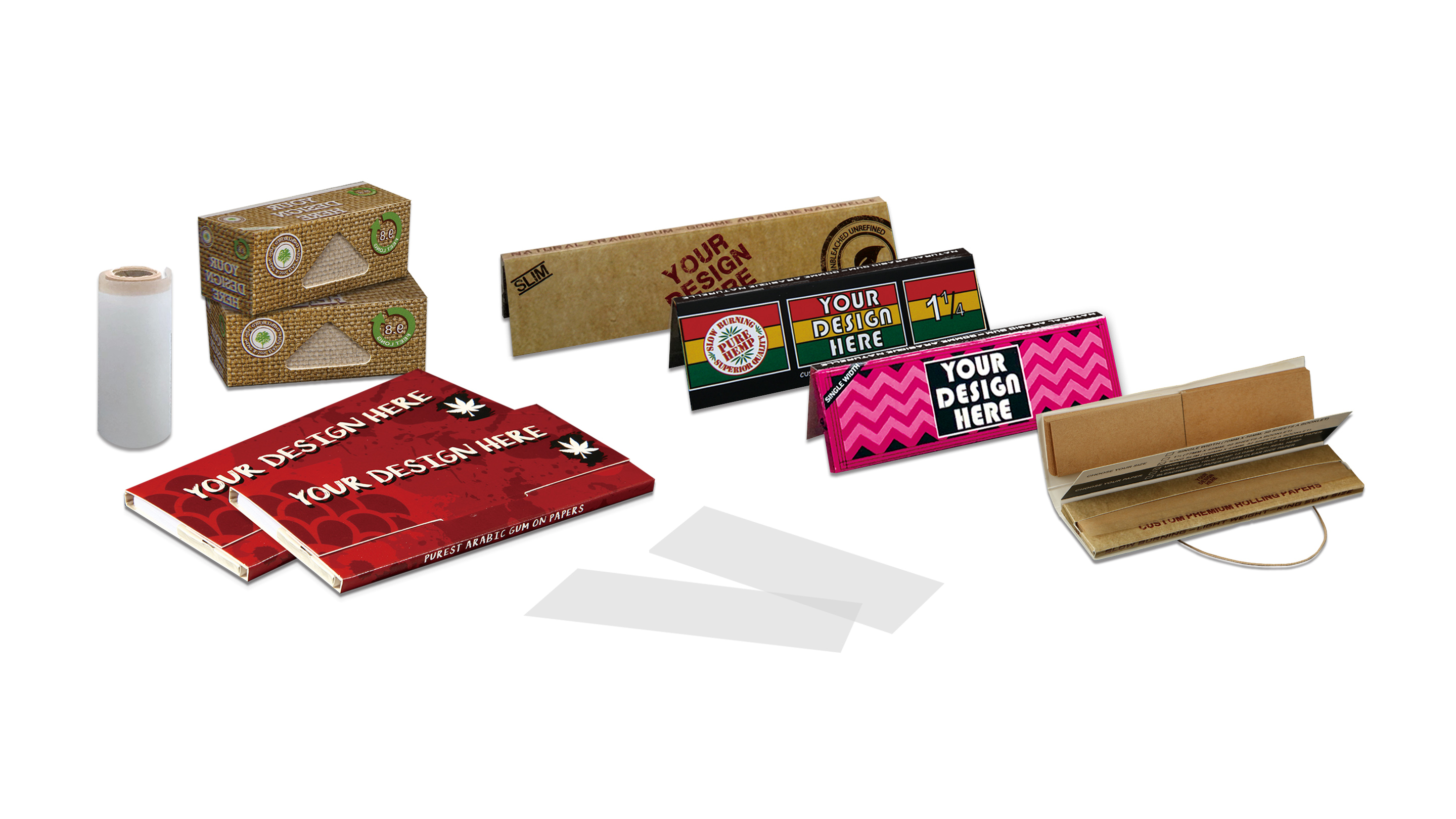
Not all "custom" is created equal. Some suppliers offer basic one-color stamp printing. Others — like RYOP — provide full-bleed, multi-color printing directly on the paper and the packaging. You should be able to choose your paper size, material, booklet count, and packaging style. If a supplier limits you to standard templates with a tiny logo zone? Keep looking.
When sourcing custom rolling papers for your dispensary, ask to see past print work. Quality suppliers will have a portfolio or samples they're proud to show off.
Responsiveness and Support
Wholesale relationships live and die on communication. Can you reach a real person within 24 hours? Will they send a digital proof before production? Do they flag potential print issues proactively? These things sound minor — until you're three weeks from a grand opening and your order is stuck with a supplier who takes five business days to answer an email.
Production Location and Shipping
Worth noting: where your papers are manufactured affects both lead time and quality consistency. Domestic production typically means faster turnaround — often 10 to 15 business days — while overseas factories might quote 4 to 8 weeks plus transit. Neither is inherently better. But you need to plan accordingly, especially for seasonal launches or event inventory.
Paper Materials Compared: Which One Fits Your Brand?
This is where a lot of dispensary buyers get tripped up. The material you pick affects the experience your customers have — and by extension, how they feel about your brand. Here's a side-by-side look at the most popular options in 2026.
| Material | Thickness | Burn Rate | Flavor Impact | Eco-Friendly? | Best For |
|---|---|---|---|---|---|
| Unbleached Wood Pulp | Medium | Moderate | Slight papery note | Partially | Everyday retail packs |
| Rice Paper | Ultra-thin | Slow | Minimal | Yes | Premium-tier dispensaries |
| Flax/Linen Blend | Thin | Slow-to-moderate | Very low | Yes | Boutique brands, eco-conscious shops |
| Organic Cellulose | Transparent/ultra-thin | Slow | None | Yes | Novelty, gift sets, high-end positioning |
| Standard Bleached Pulp | Medium-thick | Fast | Noticeable | No | Budget/value lines (declining in popularity) |
A few things jump out. First, bleached pulp papers are falling out of favor fast. Over 74% of dispensary customers in a recent industry poll said they prefer unbleached or plant-based options. If you're still stocking bright white papers, you're likely leaving money — and goodwill — on the table.
Second, rice paper has become the default "premium" pick for good reason. It's thin, burns evenly, and doesn't compete with the flavor profile of whatever herbal blend your customer is enjoying. For dispensaries positioning themselves as elevated or boutique, rice paper is practically a prerequisite.
What About Pre-Rolled Cones?
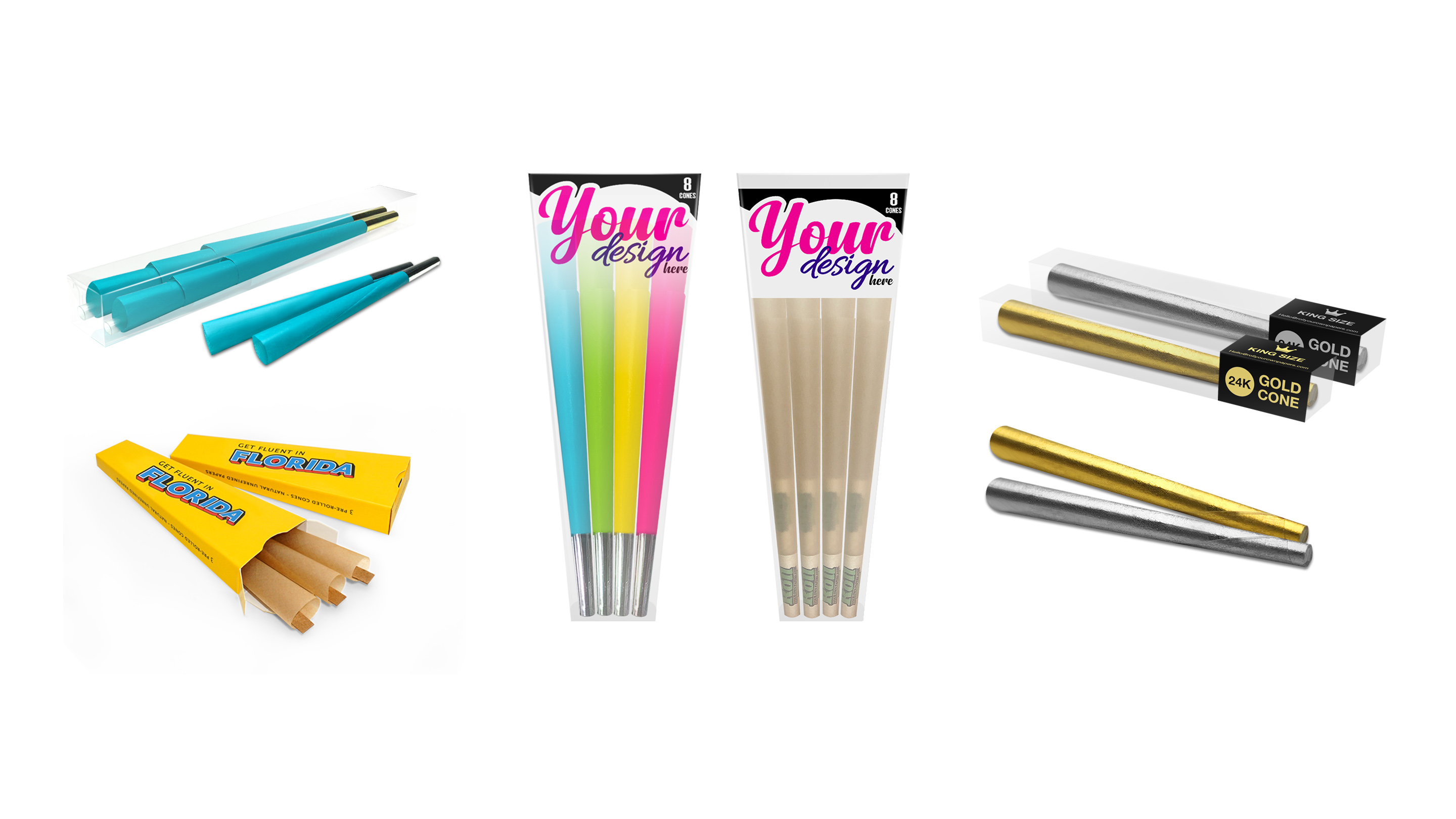
Cones deserve a quick mention because they're increasingly popular at the wholesale level. Pre-rolled cones take the manual work out of the equation, and that appeals to a huge chunk of your customer base. A lot of dispensaries now stock both flat papers and cones — flat papers for the enthusiasts, cones for the convenience crowd. If you're building out a full accessories lineup, it's worth bundling both in your wholesale order.
Understanding MOQ, Lead Times, and Bulk Pricing
This section matters most if you're placing your first order. MOQ — minimum order quantity — varies wildly between suppliers. Here's what you'll typically see in 2026.
Typical MOQ Ranges
For fully customized booklets (your logo, your colors, your paper choice), expect MOQs between 1,000 and 5,000 units. Some suppliers start at 2,500. At RYOP, you can order custom rolling papers in quantities that make sense for independent shops — not just mega-chains sitting on six-figure budgets.
For generic or semi-custom options (picking from existing designs and adding a simple logo), MOQs can drop to as low as 500 units. That's a manageable test run for a single-location dispensary wanting to dip a toe into branded accessories without committing to a warehouse full of stock.
Lead Time Expectations
Fair warning — if anyone promises fully custom papers in under a week, ask hard questions. Realistic lead times look something like this:
- Proof approval: 1–3 business days after you submit your artwork
- Production: 7–15 business days depending on complexity and material
- Shipping: 3–7 business days domestic, 10–21 days international
Total door-to-door? Figure roughly 2–4 weeks on a standard domestic order. If you're ordering for a specific launch event, give yourself at least 6 weeks of buffer. Things happen — a color proof might need revision, a material could be temporarily backordered, customs can hold things up on international shipments.
Bulk Pricing Tiers
Here's where the math gets fun. Most wholesale suppliers use tiered pricing that rewards volume. A rough benchmark:
- 1,000–2,499 units: $0.75–$1.50 per booklet
- 2,500–4,999 units: $0.50–$1.00 per booklet
- 5,000–9,999 units: $0.35–$0.75 per booklet
- 10,000+ units: $0.20–$0.50 per booklet
These ranges depend heavily on paper material, number of print colors, packaging complexity, and any special finishes like embossing, foil stamping, or spot UV. The key takeaway? Your per-unit cost drops meaningfully once you cross the 2,500-unit threshold — which is why many dispensaries start right there.
Custom Branding That Actually Drives Repeat Purchases
Slapping a logo on a booklet cover is the bare minimum. It's fine. But in 2026, the dispensaries winning the branding game are pushing further.
Full-Booklet Design
Your booklet has multiple surfaces: front cover, back cover, inside flap, and the papers themselves. Each one is a branding opportunity. The front cover is obvious — logo, brand colors, maybe a tagline. But the inside flap? That's prime real estate for a QR code linking to your loyalty program, a discount code for their next visit, or your social handles.
Some dispensaries even print tips or fun facts on the inside cover. It turns a disposable accessory into a tiny brand experience. And honestly? Customers notice. They mention it on social media. It becomes a conversation starter.
Seasonal and Limited-Edition Drops
Here's an angle almost nobody talks about: seasonal paper designs. Think holiday-themed booklets, anniversary editions, or collaborative designs with local artists. Limited runs create urgency — customers don't just buy them, they collect them. One dispensary chain in Colorado reported a 40% spike in accessory sales during a three-week limited-edition drop tied to a local music festival.
That kind of strategy only works if your wholesale supplier can handle short-run custom orders without absurd setup fees. It's another reason to pick a partner with flexible MOQs.
Co-Branding Opportunities
Dispensary buyers — this one's for you. If you carry third-party herbal brands, consider co-branded papers. The brand gets exposure, you get a differentiated product, and the customer gets something that feels curated instead of generic. Both parties typically split the order cost, which means your per-unit investment drops even further.
Packaging, Labeling, and Retail-Ready Presentation
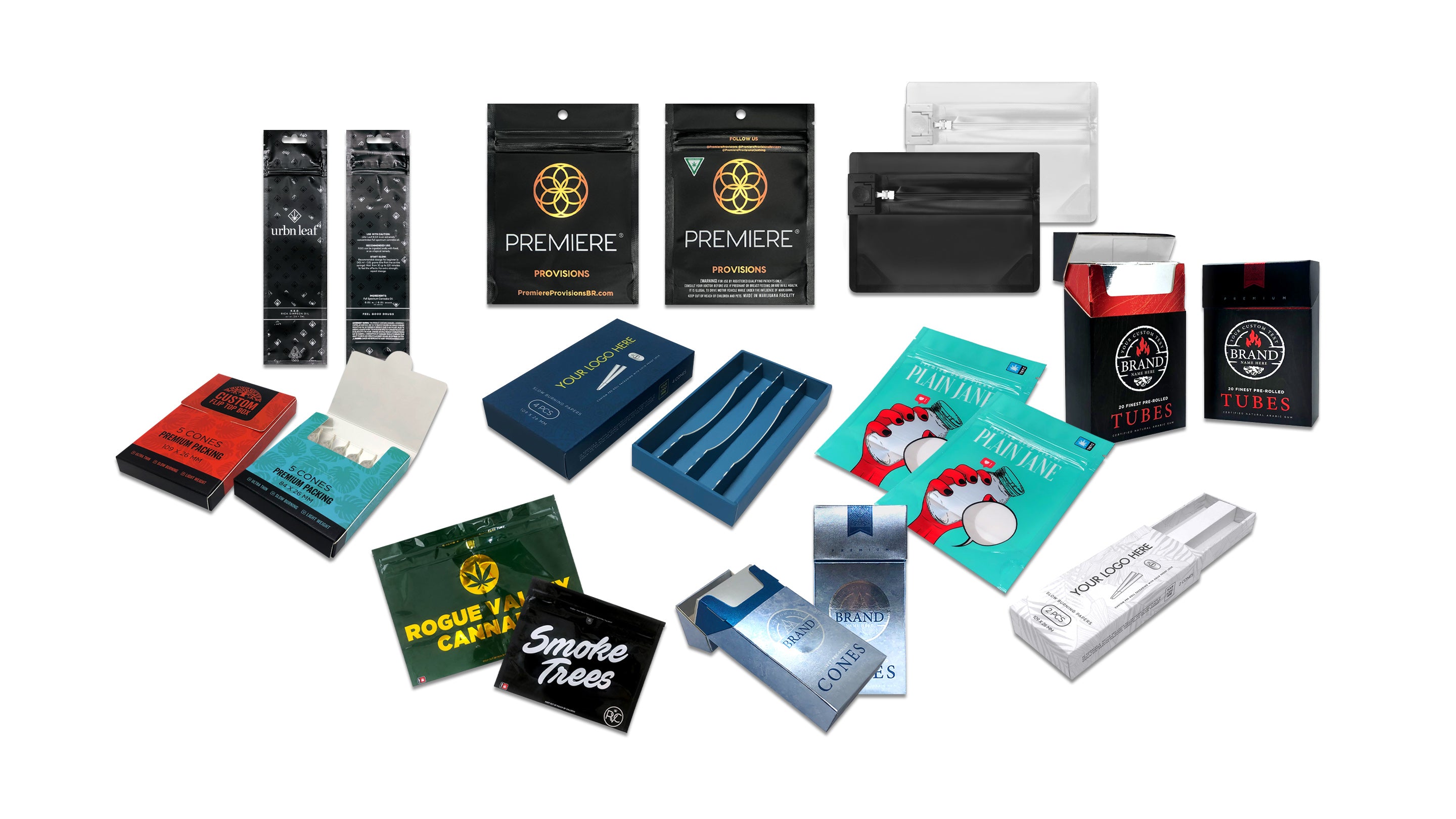
You've nailed the paper material. You've approved a gorgeous design. But if the packaging looks cheap on the shelf, none of that matters. Retail presentation is everything in a dispensary environment where customers browse products visually.
Booklet vs. Box vs. Pouch
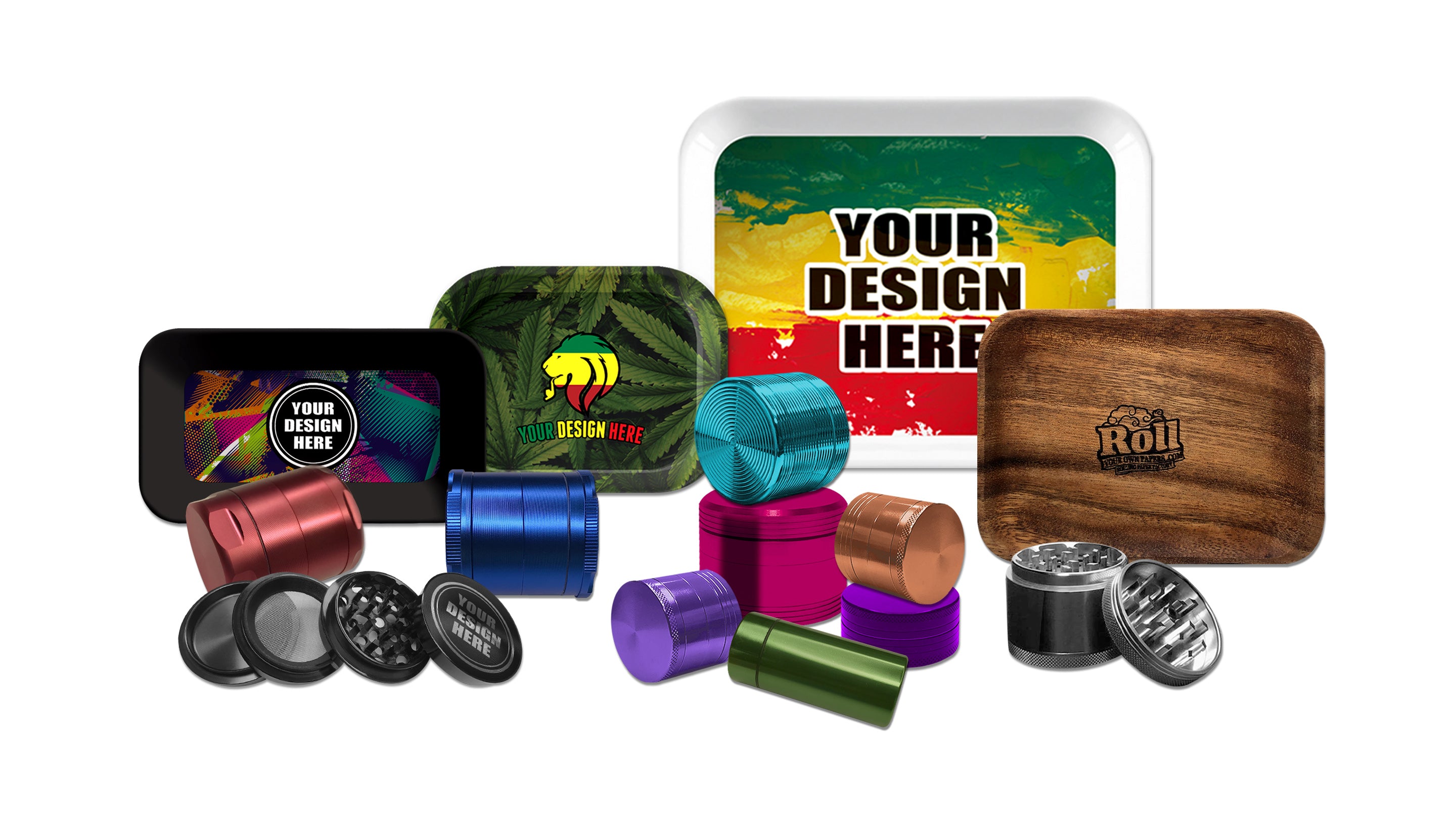
The classic booklet — a slim fold with papers tucked inside — remains the most popular format for good reason. It's compact, familiar, and easy to display. But boxed papers (think a small slide-out tray holding 20–50 sheets) are gaining ground in the premium segment. Pouch-style packaging works well for cones and is increasingly common for bundle kits that include papers, filter tips, and a small rolling tray.
Display-Ready Packaging
If your papers are going on a retail shelf or countertop display, ask your supplier about display boxes. A well-designed counter display unit (CDU) holding 24–50 booklets can boost accessory visibility at the point of sale by up to 30%, according to retail merchandising data. Some wholesale partners throw in CDUs free above certain order quantities — always ask.
Regulatory Considerations
Depending on your state or region, there may be labeling requirements for accessories sold in dispensaries. Rolling papers themselves are generally unregulated as an accessory, but your packaging shouldn't make health claims or imply specific uses that could trigger compliance issues. Keep your branding clean, professional, and focused on the product itself — the paper, the material, the craftsmanship. Your legal team will thank you.
Calculating Your True Per-Unit Cost
The quoted price per booklet isn't the whole story. Smart dispensary buyers calculate the true landed cost, which includes several factors most first-timers overlook.
Hidden Costs to Watch
- Setup and plate fees: Some suppliers charge $50–$200 for initial print setup, especially for multi-color jobs. Ask upfront.
- Proof revisions: Your first digital proof is usually free. Extra rounds? Could run $25–$75 each.
- Shipping and freight: Bulk orders are heavy. A pallet of 10,000 booklets can easily cost $150–$400 in domestic freight depending on distance.
- Customs and duties: Only relevant for international orders, but it can tack on 8–15% to your landed cost.
- Storage: If you order 10,000 units for a single-location shop, where are you putting them? Factor in any warehousing costs.
A Simple Formula
Here's a quick way to figure your true per-unit cost:
(Order total + setup fees + shipping + storage) ÷ total units = true per-unit cost
For example: you order 5,000 booklets at $0.60 each ($3,000), with a $100 setup fee, $250 shipping, and negligible storage. Your true per-unit cost is ($3,000 + $100 + $250) ÷ 5,000 = $0.67 per booklet. That's the number you use when setting your retail price — not the $0.60 on the supplier quote.
Setting Your Retail Margin
Most dispensaries mark up rolling papers 3x to 5x from their landed cost. So that $0.67 booklet might retail for $2.00 to $3.50. Branded or premium papers can command even higher margins — some boutique shops sell custom-design booklets for $5.00 or more. The margin potential on rolling papers often beats many other accessory categories, which is exactly why they're worth getting right.
How to Place Your First Wholesale Order
If you've made it this far, you're probably ready to pull the trigger. Here's a step-by-step process that'll save you headaches and make sure your first order goes smoothly.
Step 1: Define Your Specs
Before you contact a supplier, know what you want. Paper material? Size (1¼, King Size, King Slim)? Papers per booklet (32, 40, 50)? Cover finish (matte, gloss, soft-touch)? The more specific you are upfront, the faster you'll get an accurate quote.
Step 2: Request Samples
Never order 5,000 units of a paper you've never touched. Any reputable supplier will send material samples — often free or for a small shipping fee. Feel the paper. Check the print quality. Roll with it yourself. That ten-minute investment can save you thousands in regret.
Step 3: Submit Your Artwork
Most suppliers need print-ready files in vector format (AI, EPS, or high-res PDF at 300dpi minimum). Don't have a designer on staff? Many wholesale partners — including RYOP — offer design help or templates to get you started. Make sure your brand colors are specified in CMYK for accurate print reproduction.
Step 4: Approve Your Proof
You'll get a digital mockup showing exactly how your papers and packaging will look. Review it carefully. Check for typos, color accuracy, logo placement, and bleed areas. Once you approve, changes get expensive. Take the extra day to get it right.
Step 5: Confirm Production and Delivery Timeline
Get a written production timeline with key milestones: proof approval date, production start, estimated completion, and shipping method. If you need the order by a specific date, make that crystal clear at the quoting stage — not after production's already underway.
Step 6: Reorder Before You Run Out
Sounds obvious, right? But you'd be surprised how many dispensaries wait until their last box to reorder. A solid rule of thumb: when you hit 25% of your remaining stock, place your next order. Repeat orders move faster (no proof needed if you're reordering the same design), but you still need to account for production and shipping time.
Ready to explore your options? Browse the full lineup of custom rolling papers available from RYOP and request a wholesale quote directly from the product page.
🔥 Shop Custom Rolling Papers at RYOP
Get premium custom rolling papers for your brand, event, or personal use. Bulk pricing available.
- ✔️ Premium quality
- ✔️ Custom branding available
- ✔️ Bulk & wholesale pricing
- ✔️ Fast shipping worldwide
📦 Bulk orders available | 🚚 Fast shipping | 🌱 Eco-friendly options
Frequently Asked Questions
- What's the minimum order quantity for wholesale rolling papers? Most suppliers set MOQs between 1,000 and 5,000 units for fully custom-printed papers. For semi-custom options with simpler branding, you can sometimes get away with as few as 500 units. At RYOP, MOQs are built to work for independent shops — not just large chains.
- How long does it take to receive a wholesale rolling paper order? Plan for 2 to 4 weeks total on a standard domestic order. That's roughly 1–3 days for proof approval, 7–15 days for production, and 3–7 days for shipping. International orders usually add 10–21 extra days for transit and customs.
- Can I request a sample before placing a bulk order? Absolutely. Reputable suppliers will send material samples so you can feel the paper weight, check print quality, and test the rolling experience yourself. Most offer samples for free or charge a small shipping fee. Don't commit to thousands of units without seeing the product first.
- Do you offer eco-friendly rolling paper options? Yes. Unbleached wood pulp, rice paper, flax-linen blends, and organic cellulose are all eco-friendly options available for wholesale orders. Over 74% of dispensary customers now prefer unbleached or plant-based papers, which makes eco-friendly materials a smart default for new orders.
- What file format do I need for my custom artwork? Submit print-ready files in vector format — AI, EPS, or high-resolution PDF at 300dpi minimum. Colors should be in CMYK rather than RGB for accurate reproduction. If you don't have a designer, many suppliers offer templates or basic design help to get you going.
- How much should I mark up wholesale rolling papers at retail? Most dispensaries go with a 3x to 5x markup over their true landed cost. A booklet that costs you $0.65 all-in might retail for $2.00 to $3.50. Premium or limited-edition designs can fetch $5.00 or more per booklet, especially in boutique retail settings.
- Can I order different designs in the same wholesale batch? It depends on the supplier. Some allow split runs — say, 2,500 units of Design A and 2,500 of Design B within a single 5,000-unit order — while others require each design to meet the full MOQ on its own. Always ask about split-run policies and any extra setup fees before you place your order.


Leave a comment